Not as crowded as Mallorca, not as hip as Ibiza: the Balearic island of Menorca is an absolute insider tip and the perfect holiday destination for all those who love paradisiacal beaches, secluded bays, green nature reserves and individual holidays. From travel weather to bathing temperatures to the ideal time to travel and the most beautiful highlights of the island: Here comes the great holiday guide for Menorca.
Overview
Getting to Menorca
From Germany, several airlines fly directly to Menorca from Cologne, Düsseldorf, Berlin or Frankfurt in the high season. The flight time is between two and three hours, depending on the departure point.
Read more after the ad
Recommended editorial content
At this point you will find external content from Qualtrics Ireland Limited that complements this article. You can view it with one click.
I agree to external content being displayed to me. This may transmit personal data to third party platforms.
In the low season, the flight schedule is somewhat limited. Then the journey is made via Mallorca. There are ferry connections from Mallorca to Menorca all year round.
Menorca airport is only a few kilometres from the island's capital Mahón. You can easily get to the city by bus number 10, where you can change to other buses. If you want to rent a car, you can do so directly at the airport, in Mahón, Ciutadella or the larger seaside resorts.
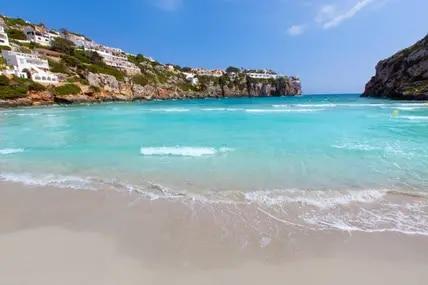
Cala en Porter beach is one of around 100 paradisiacal beaches and coves on Menorca.
Weather on Menorca
The weather on the Balearic Islands is typically Mediterranean: hot summers and mild, rainy winters characterise the climate. In summer, temperatures can reach 40 degrees Celsius, while in winter the thermometer rarely drops below the ten-degree mark.
The average annual temperature in Menorca is 16.9 degrees. The hottest month is August, the coldest January. The mild spring starts relatively late: temperatures do not climb above 20 degrees until May. The sea is also not ideal for swimming until then.
From May, when the temperatures rise, the water warms up too. In July, August, September and October, the water temperature reaches at least 21 degrees. On average, there are 7.4 hours of sunshine per day on the island. July is the sunniest month on Menorca. The sun shines for around 11.4 hours a day.

Summer, sun, beach: on Menorca you can expect picture-perfect weather.
Travel time for Menorca
The main travel season in Menorca begins with the rising temperatures in May and continues through the popular summer months well into autumn. The months of June to September are considered the best time to travel.
Generally, Menorca can be visited all year round, as the low season is ideal for active holidaymakers who want to escape the summer heat. In addition, the prices also drop then. Be careful: many hotels close in the off-season.

View of Cala Galdana, the Mediterranean Sea and many hotels on Menorca.
Accommodation on Menorca
On holiday in Menorca, you have all options when it comes to accommodation. You can stay in a classic beach or all-inclusive hotel as well as in family or boutique hotels, and there are also many holiday homes and flats all over the island.
In addition, there is the variety of locations: in the seaside resorts of the island you are directly on the beach and have a great infrastructure, in the island towns of Mahón and Ciutadella you can check into a city hotel or in the quiet interior in a finca hotel or an agroturismo business.
According to booking.com, a three-star hotel in Menorca costs on average 72.28 euros per night and a four-star hotel 93.22 euros per night. Holiday homes and flats in Menorca average 78 euros per night, according to "hometogo".
Beaches in Menorca
On holiday in Menorca, 285 kilometres of coastline and almost 100 beaches and sandy coves await you.
Cala Pilar
Cala Pilar beach on the north coast of Menorca has two superlatives: it is one of the most beautiful beaches on the island and one of the most difficult to access. This is because sun-seeking tourists have to walk for half an hour from the car park to the beach.
The path leads through a pine forest, sometimes steeply uphill, sometimes gently downhill, until you reach a rugged cliff edge and are offered an incredibly beautiful panorama. From here, a wooden staircase leads to a bay where turquoise water laps onto the beach in gentle waves.

Cala Turqueta
One of the most famous beaches on Menorca lives up to its promise: Cala Turqueta in the south of the island is indeed as turquoise as its name. The water is crystal clear and shines in strong turquoise tones!
The beach is around 100 metres long and lies between the resorts of Cala'n Bosch and Cala Galdana. In summer it's always crowded here, so you should come early in the morning if you want your peace and quiet.
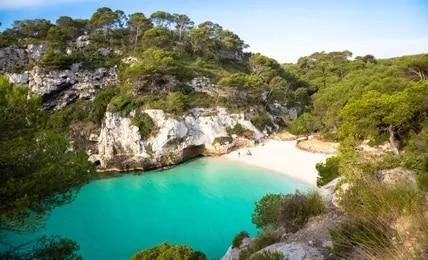
At Cala en Turqueta, the name says it all: the water is bright turquoise!
Playa de Cavalleria
A colourful spectacle awaits you when you visit Playa de Cavalleria in the north of the island. Situated in a beautiful dune landscape, a 500-metre-long natural beach awaits you here, which you reach via a wooden staircase.
A special feature is the colour of the sand: It has a reddish colour. This is due to the red rocks that surround the beach. Tip: The northernmost point of the island, the Cap de Cavalleria lighthouse, is only a few kilometres away.

The sand at Playa de Cavalleria has a reddish tinge.
Platjes de Son Bou
The longest beach on Menorca is located about 20 kilometres from Mahón and 40 kilometres from Ciutadella: Platjes de Son Bou is in the resort of the same name and is three kilometres long.
There is a lot going on in the high season, because the beach is well developed: There are parking spaces behind the sand dunes and many beach cafés, sun loungers and parasols. If you want, you can go jet skiing, windsurfing, snorkelling or rent a pedal boat.
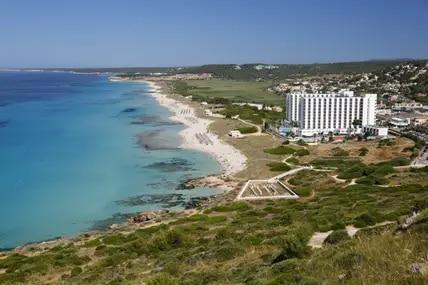
The Platjes de Son Bou is the longest beach on Menorca.
Places of interest on Menorca
Paradisiacal beaches and unspoilt natural landscapes, two colourful island towns and many quaint villages: we tell you which highlights await you on Menorca.
Mahón
The island capital Mahón is located in the west of Menorca. Around 29,000 people live here. On holiday, a day trip is worthwhile, because the city is enormously versatile. Whether in the picturesque old town with its art nouveau palaces, in the gigantic harbour with its bustling promenade or in the restaurants or shops: There is a lot to discover!
A superlative is the port of Mahón. It is the largest natural harbour in the Mediterranean and the largest in the world after the harbour in Sydney! The fjord is 5.5 kilometres long and up to 1.2 kilometres wide! To explore the harbour area and the fjord in all its splendour, it is worth taking a harbour tour.

The harbour in Mahón is 5.5 kilometres long and up to 1.2 kilometres wide.
Ciutadella
The counterpart to Mahón is Ciutadella in the west of the island. Ciutadella was the capital of Menorca until the 18th century. What both towns have in common are many remnants from the British colonial period.
The most important sights in Ciutadella are the Gothic-style Cathedral of Santa Maria de Menorca, the Episcopal Palace, the Augustinian Monastery and the convent church Església des Socors, known as the most beautiful Renaissance church on the island. The heart of the city is the Plaça des Born and the Town Hall.
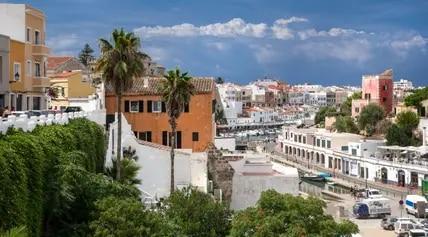
Ciutadella is the second larger town on Menorca and is located in the west of the island.
Binibeca Vell
A picture-book village lies in the southeast of the island: Binibeca Vell looks like a traditional fishing village at first glance, but appearances are deceptive: the all-white hamlet is not historical, but the result of a resourceful architect!
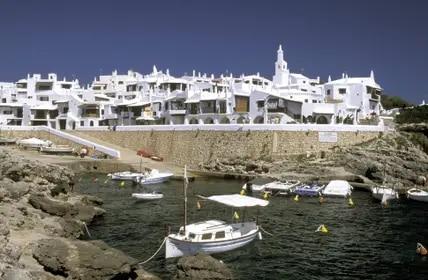
A fishing village straight out of a picture book: Binibequer Vell on Menorca.
In 1972, Menorcan architect Antonio Sintes Mercadal designed the village of Binibeca Vell - and even won an architecture prize for his creation of narrow cobblestone alleys, whitewashed dwellings and Moorish arches. The village is small but incredibly photogenic, and the holiday flats here are also in high demand.
Hiking trails on Menorca
Along the coast, along old bridle paths or once around the island? The hiking trails on Menorca take you on foot to the most beautiful spots on the Balearic island.
Hiking the Camís de Cavalls
One of the most beautiful hiking trails on the Balearic Islands leads around the island: the Camís de Cavalls. As early as the 14th century, the Menorcans laid out the path to detect enemies in good time. In 2009, the 185-kilometre-long hiking trail was renewed.
The route (signposted GR 223) can be walked in individual stages and passes the most beautiful bays. So you can always jump into the water along the way. The Camí de Cavalls can also be done by bike or mountain bike.
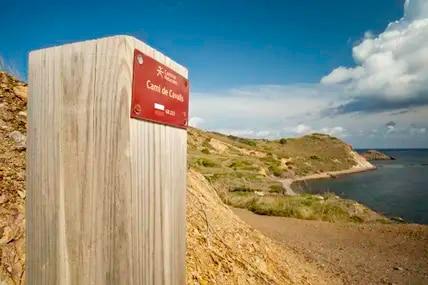
The Cami de Cavalls leads once around the island.
Hike from Son Bou to Cala en Porter
A beautiful section of the Camís de Cavalls runs along the south coast of the island and leads from the popular seaside resort of Son Bou to the picturesque beach in Cala en Porter. The hike is signposted with the Camí de Cavalls signposts.
The route first leads through flowering landscapes with fruit orchards in the hinterland and then back to the coast until the fantastically beautiful bay in Cala en Porter is reached. The reward is a swim in the turquoise blue water.
Hike up Monte Toro
If you want to hike up Menorca's highest mountain, you don't have to be a mountaineer. At 357 metres, Monte Toro can be conquered by anyone. Start in the village of Es Mercadal in the centre of the island. From here the path leads steadily uphill.
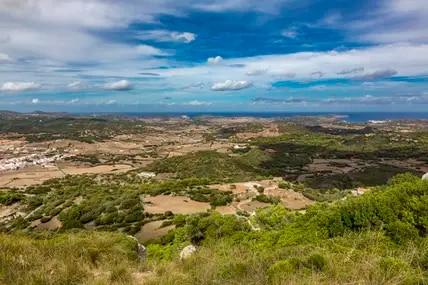
At 357 metres, Monte Toro is the highest point on the island.
From the summit you have a beautiful view over the landscape and the sea. Generally good to know: Monte Toro is the highest elevation of the island, which means: Menorca is very flat and there are hardly any strenuous climbs.
Hike from Cala en Turqueta to Cala es Talaier
Those who keep hiking short and sweet should go to Cala en Turqueta and do a short circular hike there. The bay, which got its name because of the wonderfully turquoise water, is a great start to head for nearby bays.
The short tour starts in Cala en Turqueta and leads to the most beautiful bathing bays on the island. The destination is the small bay Cala es Talaier, which invites you to swim. There is a rest area in the shade and a white sandy beach.

Cala Turqueta in the south of Menorca enchants with crystal-clear water that glows in every shade of turquoise imaginable.
Insider tips for Menorca
Between the cliffs and the sea, there are plenty of highlights waiting for you on Menorca. From island sandals to island gin: we reveal the best insider tips for Menorca.
The most beautiful sunset
There are countless places to see the sunset on Menorca, but one stands out. This is due to its location: Cap de Cavalleria is on the far northern edge of the island and is surrounded by red sand!
The reddish backdrop, the nearby sandy beach Playa de Cavalleria and the oldest lighthouse on the island make for a perfect setting and spectacular sunsets.

You can't party any cooler than in the cave bar Cova den Xoroi.
The cool cave bar
Probably the most unusual bar on Menorca is located at Cala en Porter in an extremely exciting setting: "Cova d'en Xoroi" is a cave bar located on a cliff. You can party in the cave and on open-air seats high above the sea.
The location is always busy, but it's definitely a great place for a drink - whether it's for an afternoon coffee, a sundowner or nighttime dance moves. The entrance fee is about 10 euros, but it's worth it because the bar is simply mega cool!
Gin and tonic and pomada
A holiday on Menorca is only complete when gin comes into play. Because this is the drink of the island. Why? At the time of the British occupation in the 18th century, the desire for a good gin arose. But there was no such thing on Menorca until the Xoriguer family created the island's first gin.
Even today, holidaymakers sip the gin, which has been produced since then in the Destilerías Xoriguer according to a secret family recipe. In addition to a classic gin and tonic, the island gin is also mixed into a pomada, consisting of gin, lemonade and ice.

Menorca's most beautiful invention: the avarca shoes!
The island sandals Avarcas
One of the island's most beautiful inventions was created over 100 years ago: Because shoes were hard to come by from mainland Spain, the islanders created sandals from the old rubber of car tyres and leather.
Today, the traditional avarcas can be found everywhere on the island. The shoes are made of leather and come in many colours. They are comfortable and inexpensive: you can buy a pair for around 25 euros. Important when shopping: The original must bear the stamp "Avarca de Menorca".
Related articles
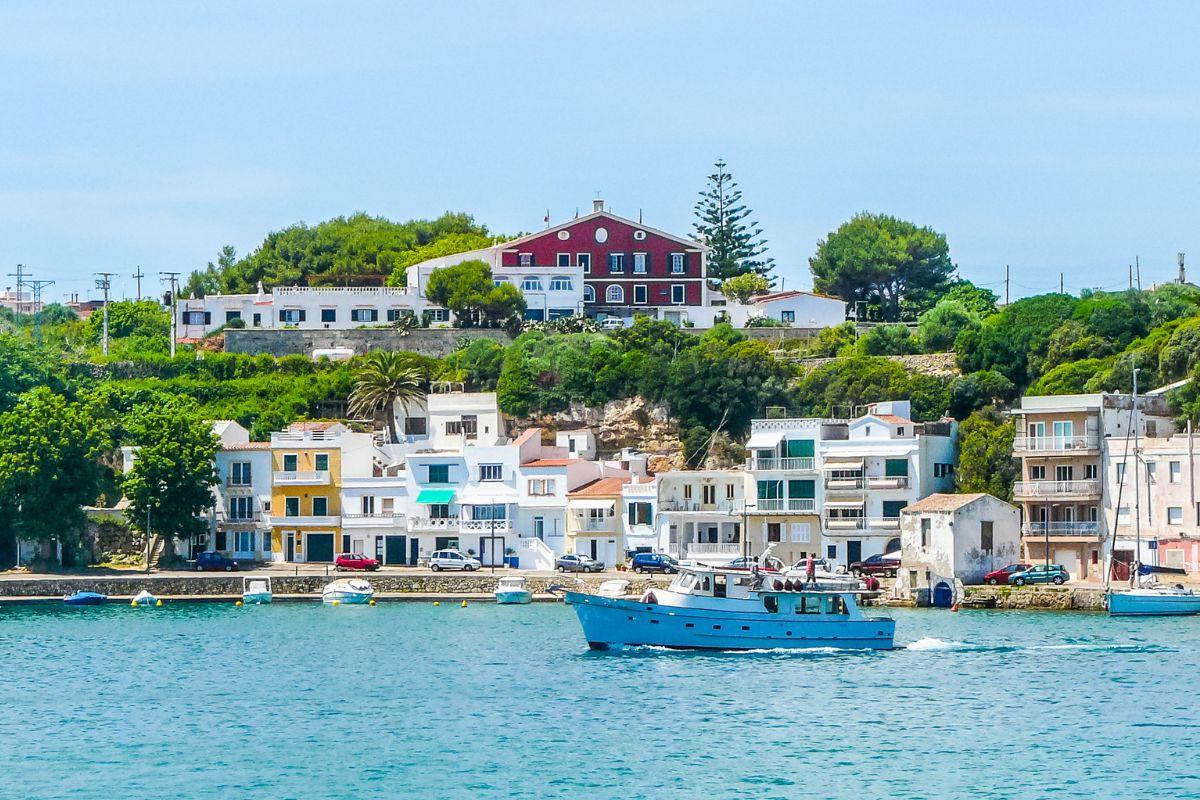
What to do in Menorca? 65 must-see activities and visits

Menorca for hiking fans: On the way on the Camí de Cavalls
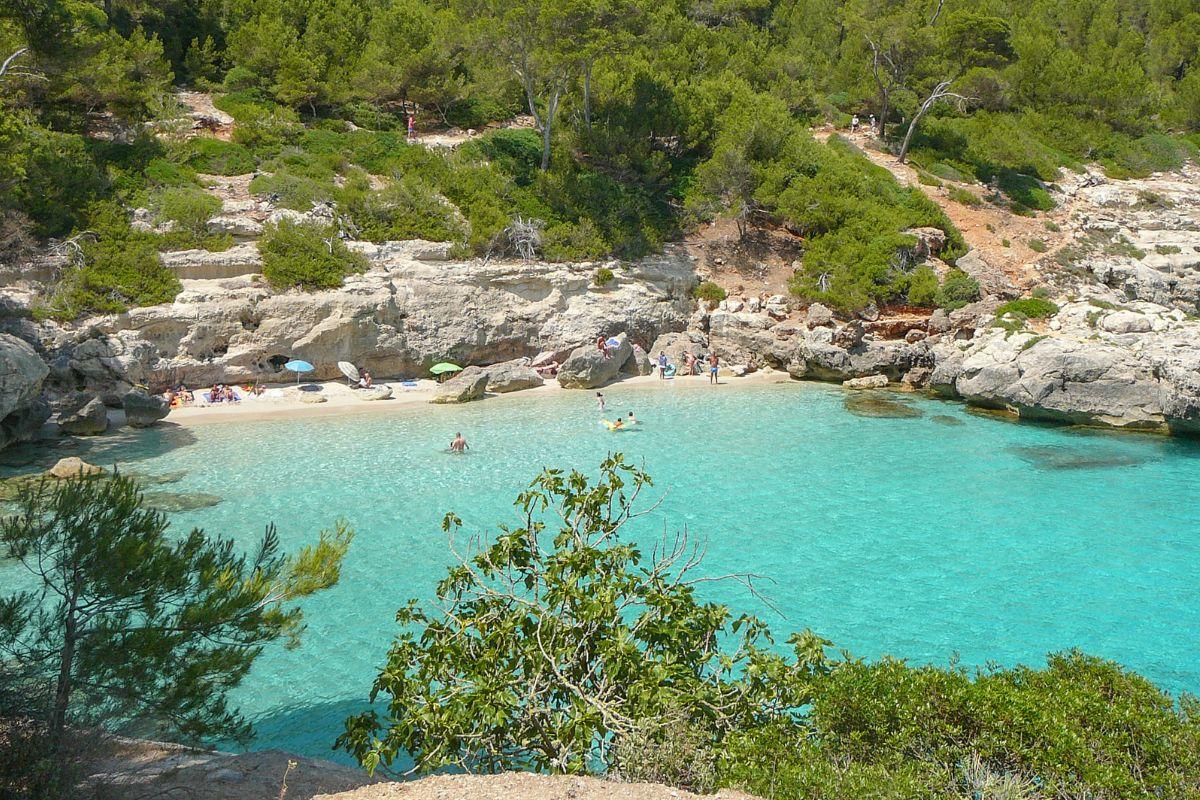
Visiting Menorca, 21 things you need to know before leaving
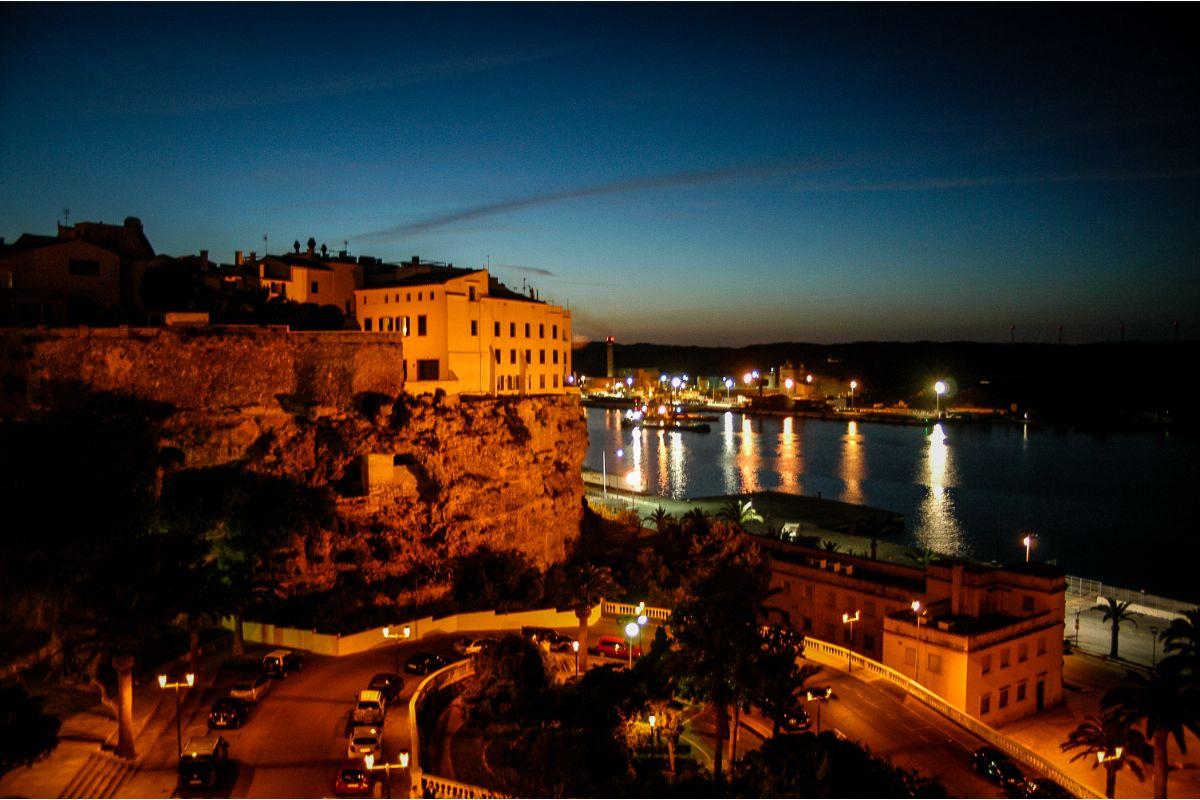
Mahon Minorca, the 25 must-see visits and activities
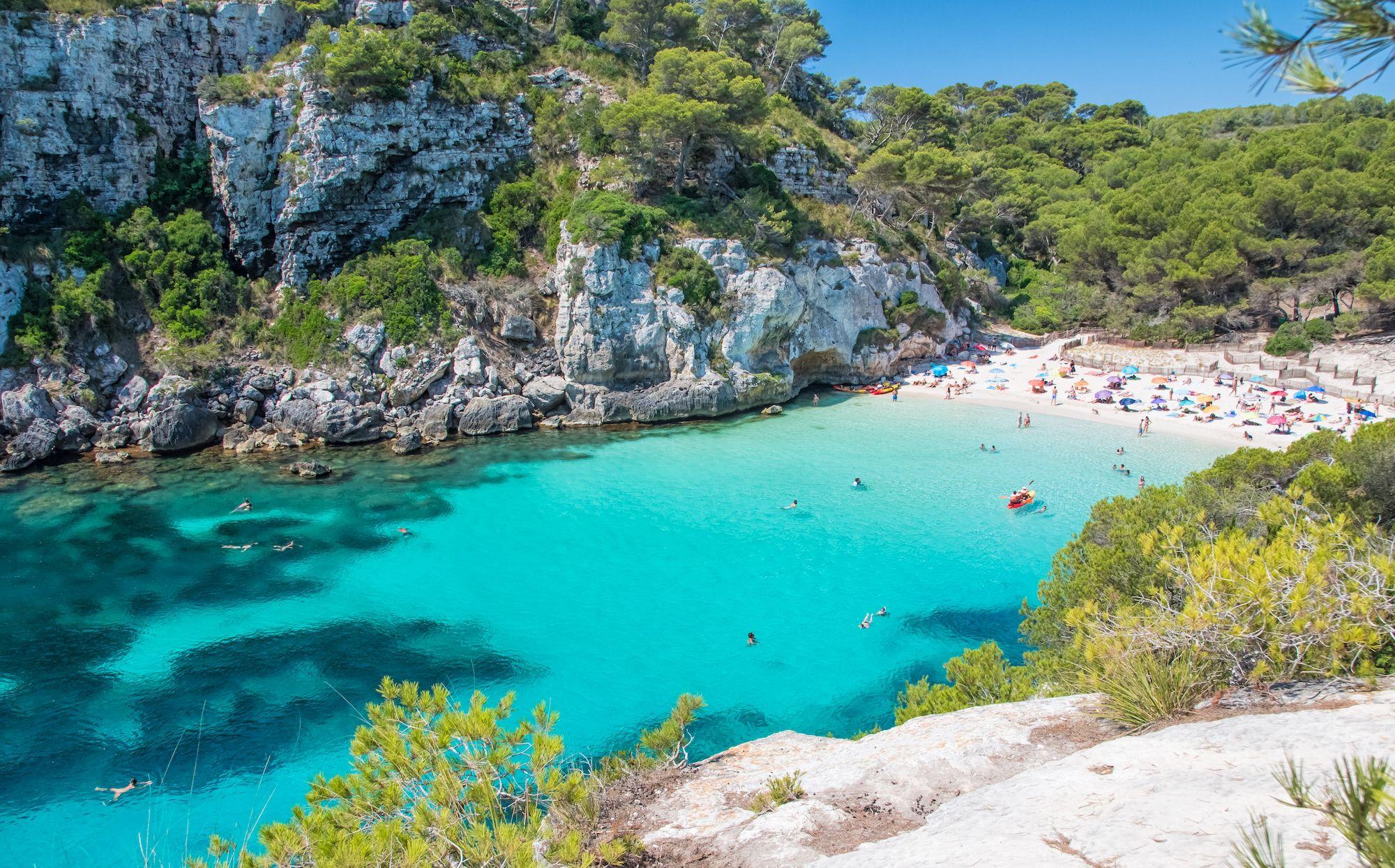
What to do in Menorca
Carnival in Tenerife, Canary Islands: programme, info and costs
The beauty of the Balearic Islands in low season