Although it is small in size and has been a popular summer holiday destination for decades, the island of Menorca has some unexpected features and characteristics that are worth knowing about before you start planning or booking anything and visit Menorca.
Ibiza is smaller, better protected, less developed and much more discreet than its Balearic neighbours, Majorca and Ibiza.
This leads many tourists to visit Menorca for a sunny getaway in early spring or late summer.
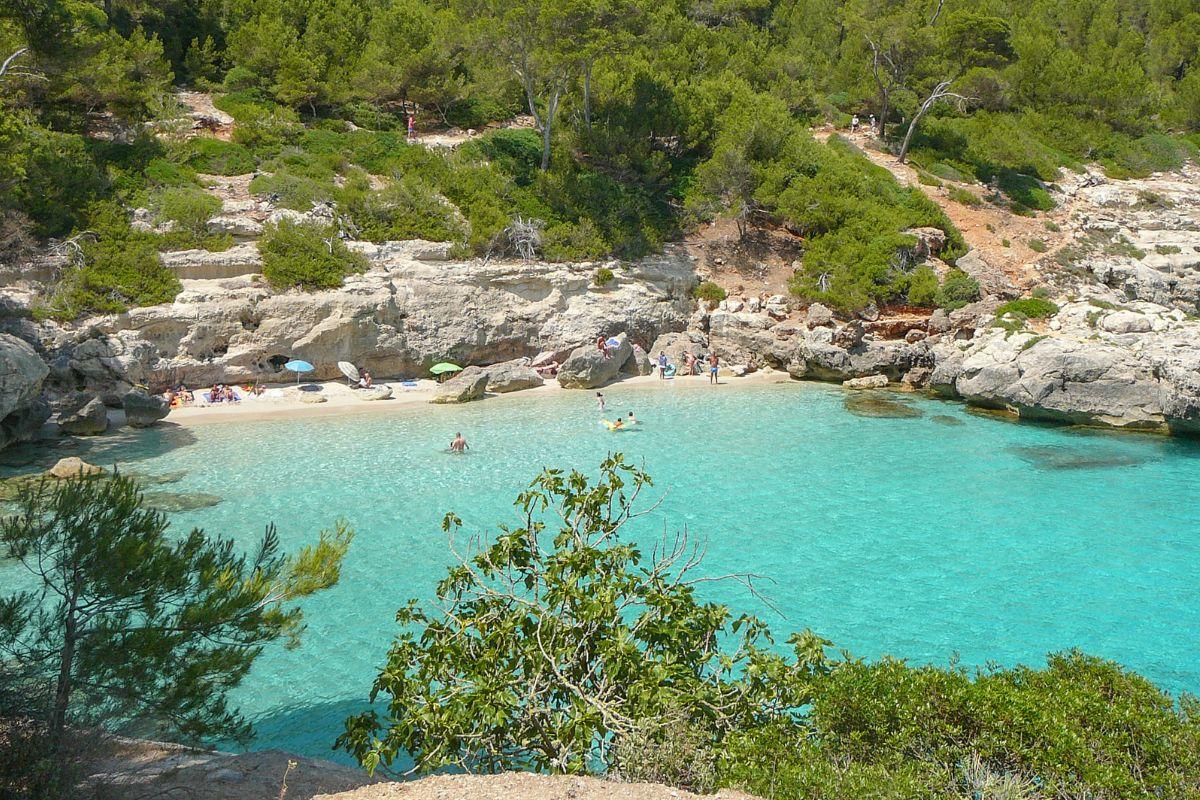
With over 70 heavenly beaches and calas, divine water, fantastic flat trails for hikers, two pretty port towns, artisanal food producers, and underpinned by far more intrigue and historical influences than one might think, Menorca also offers a surprising diversity of travel experiences for the (almost) full range of travel styles.
So much so that many of you reading this article right now may be planning a week or two quite different from other readers.
Whatever your travel style, this article will help you expand or enhance what you have in mind for Menorca (whether it's beaches and relaxation, gastronomic and cultural experiences or the Camí de Cavalls hike).
With a focus on practical advice and providing essential context and reliable resources, our article will give you all the information and ideas you need to start planning your Menorca holiday and travel more and better.
Here are 21 essential things to know before visiting Menorca.
21 things you need to know before visiting Menorca
There is only one airport
Menorca Airport, also known as Mahon Airport (MAH), is the only airport on the island. It is located in the south-east of the island, just under 4.5 km from Mahón, the capital of Menorca.
This makes it very easy to find flights and plan your arrival, as it is served by all European low-cost airlines.
Transport links to and from the airport are quite good, but you will have to choose according to your budget and your plans for the island:
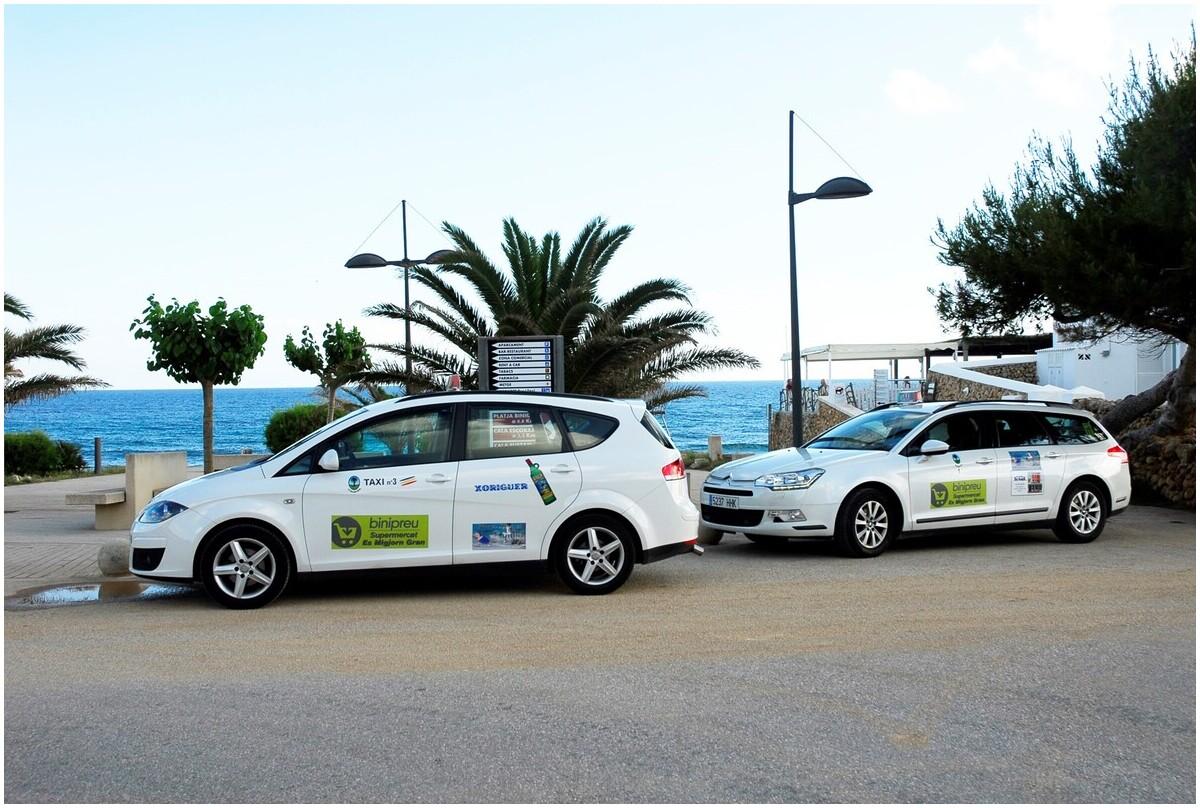
Taxis | They will take you to all parts of the island, with fixed fares for each destination displayed transparently on a pillar in the arrivals halls and outside at the station. Prices start at €15 for trips in the south-east and rise to €70 for stations in the west. Note that Uber does not operate in Menorca.
Public buses | There is only one bus to/from the airport, which takes you to/from Mahon bus station in about 15 minutes (€2.75 per person). The service is frequent, and from the bus station you can catch a bus to most towns and resorts on the island.
Car hire | We'll come back to this later, but the airport is also the cheapest place to hire a car in Menorca. If you want to get an idea of prices and availability, the best place to start looking on the island is Rentalcars.com, which lists most of the local companies as well as the major rental brands.
At the airport, the Caixabank ATM charges a fee if you want to withdraw money and there is also a very useful tourist office if you need advice, help or maps.
It is also possible to take a ferry to Menorca from the Spanish mainland but for most of you reading this we know that the airport will be your first stop.
Two languages are spoken
The locals speak Menorquin (Menorquí), a dialect of Catalan, and they also speak Castilian, which is generally known or called 'standard' Spanish.
Many signs show only Catalan or include both languages, and this is also the reason why several places have two names: Mao / Mahón, Binibequer / Binibeca, Isla del Rey / Illa Del Rei. On signs and bus timetables, the Catalan name is the most important.
For the visitor, it is worth appreciating this distinction and the strong socio-cultural and political importance of this language, which is still widely spoken here.
However, in terms of the travel experience, the bilingual nature of the island will not have too much of an impact; English is widely spoken in holiday resorts and in the tourist services/hospitality industries.
It is always a good idea to try and learn some basic Spanish or, if you already have it, to use it rather than simply relying on English; you will not be expected to speak Catalan.
Know the best time to visit Menorca (and the worst)
Unofficially, the tourist season starts on 1 May and ends in late September or mid-October. This includes restaurants, businesses, cultural venues, car rentals, hotels, water activities, resorts, as well as public transport links to places that will only be popular (such as Cala Macarella and Cala Galdana) when the heat is high.
The summer season can be divided into several periods:
May to mid-July
The off-peak season when prices and availability are best, all shops are open and there are more coastal transport links. Average temperatures are: May (13-21°c), June (17-25°), and July (20-28°+).
Earlier visits may mean weather too cool for beach days or sea bathing, while prices gradually rise as you get closer to July.
Note that you can also visit in April, but we recommend waiting until May to have more services and options of things to do in Menorca.
Mid July to end of August / beginning of September
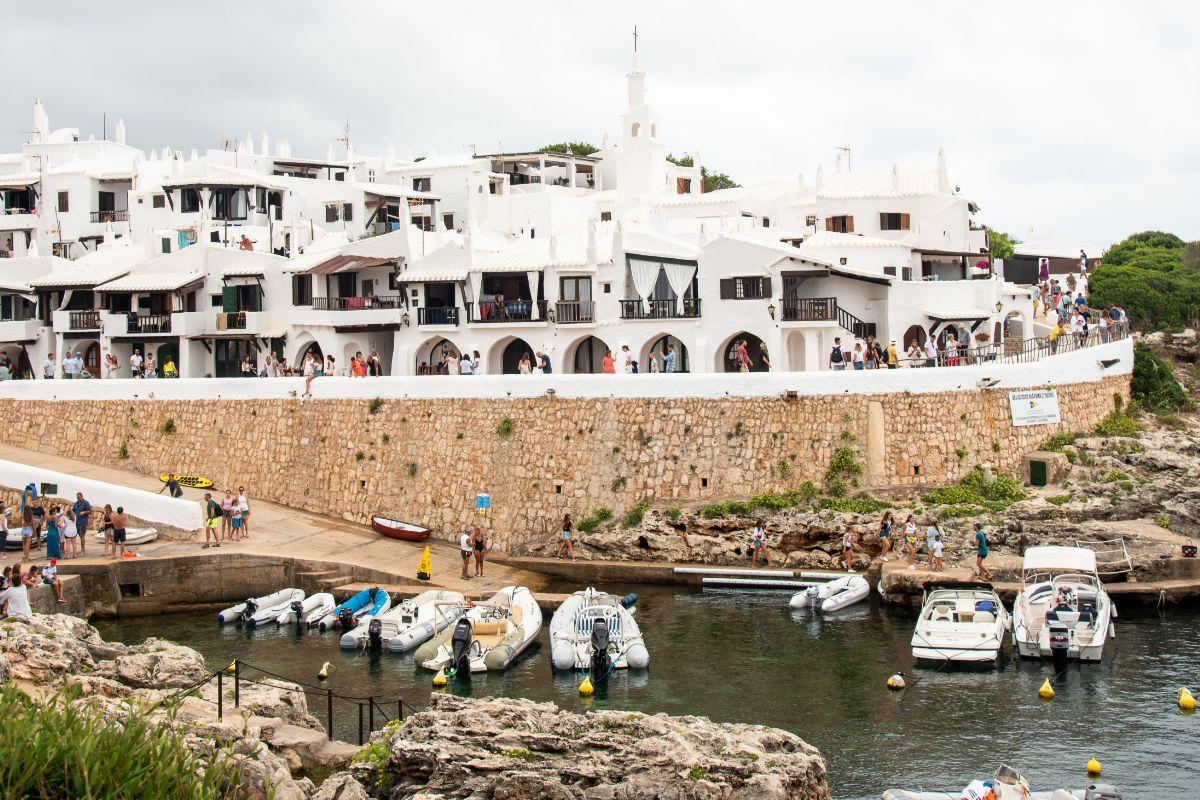
The high season when temperatures and prices soar. All the coastal bus links to the beaches and resorts operate with more departures, but crowds of holidaymakers from all over Europe arrive to share them with you. Accommodation costs will be ridiculous in places (more on that later), but it's the sheer volume of people that will be the biggest problem.
Average temperatures are 21-29°+ in August and 19-27° in September. Note that high season conditions mean early starts and afternoon breaks or respite in the shade are absolutely essential.
Mid-September to late October
The late summer shoulder season certainly has its advantages: crowds are more manageable, prices are down, all shops and services are still in full swing, the Mediterranean Sea is delightfully warm and the cooler temperatures make hiking much more enjoyable.
The only downside to bear in mind is that the chances of changeable or overcast weather are greater than in July/August. With average temperatures of 15-23° in October, we also recommend you try to arrive earlier in the month.
It is entirely possible to visit Menorca outside of these seasonal periods, but it will fundamentally change what you can do and where you can stay.
For those hoping to do the entire Camí de Cavalls, doing it outside of summer is actually a great idea due to the milder walking conditions.
There is no single travel experience in Menorca
We talked about this in the introduction, but we think it's important to highlight it here.
Despite its size (from north to south the island is 10 miles, from east to west 30), there are actually many different ways to experience Menorca.
There will be at least one person or group who will experience it very differently:
The package traveller
The gourmet
The hiker
The all-day tanner
The independent traveller
The family holiday
The luxury holiday
Water sports and sailing, etc.
Each style will of course have a good dose of beach, sea and free time in common... but what kind of beach and how do you get there?
Are water parks important or to be avoided like the plague? Do you want to explore a large part of the island or stay in a small pocket for a week? Will you take public transport everywhere or hire a car to explore? Do you want to be based in a tourist town, a colonial town, by the sea or on a rustic farm in the middle of nowhere?
So, when we talk about 'travel to Menorca', it's really important to understand that it's impossible to make a single description of the Menorca travel experience.
A family having a fun holiday with children will have very different expectations and priorities to a young couple who like to hike along dusty roads to wild beaches and stay in quiet places, or an older, greedy couple who like to explore but money is no object when it comes to accommodation.
Your personal travel style, budget, location, type of accommodation and whether or not you have a rental car or scooter will all strongly influence this.
Menorca is not Ibiza in terms of travel experience
Ibiza, Mallorca, Menorca and Formantera (the Mediterranean archipelago collectively known as the Balearic Islands) are all very popular with different types of Spanish, British and European holidaymakers.
However, Ibiza and Mallorca have a reputation (both positive and negative) for being places where young tourists and groups of friends go to have fun, enjoy the sun, clubs and nightlife.
Menorca is certainly not a destination for those looking to party: there are no Benidorms or Magalufs, no nightclubs, thousands of concrete towers by the water or streets of cheap bars where groups of drunks gather.
There are several reasons for this divergence, but one of the main factors is General Franco's long-standing grudge against the small island.
To punish it for its republican stance during the Spanish Civil War, Franco deprived Menorca of public building funds and infrastructure investment for the duration of his nearly four-decade reign.
In contrast, Mallorca and Ibiza (both of which had supported Franco) were flooded with money for intense and misguided development during the tourist boom of the 1960s and 1970s.
This means that skyscrapers and large resorts are rare in Menorca, with pretty whitewashed one- and two-storey flats and houses with ivy-green shutters being much more common (although there are a few designated resorts where a single skyscraper is the exception).
Avoiding the money of rampant commercial tourist development is an integral part of Menorca's charm and sets it apart from other places in Spain that have been irrevocably altered by the influx of mass tourism and short-term construction.
The best beaches are just around the corner
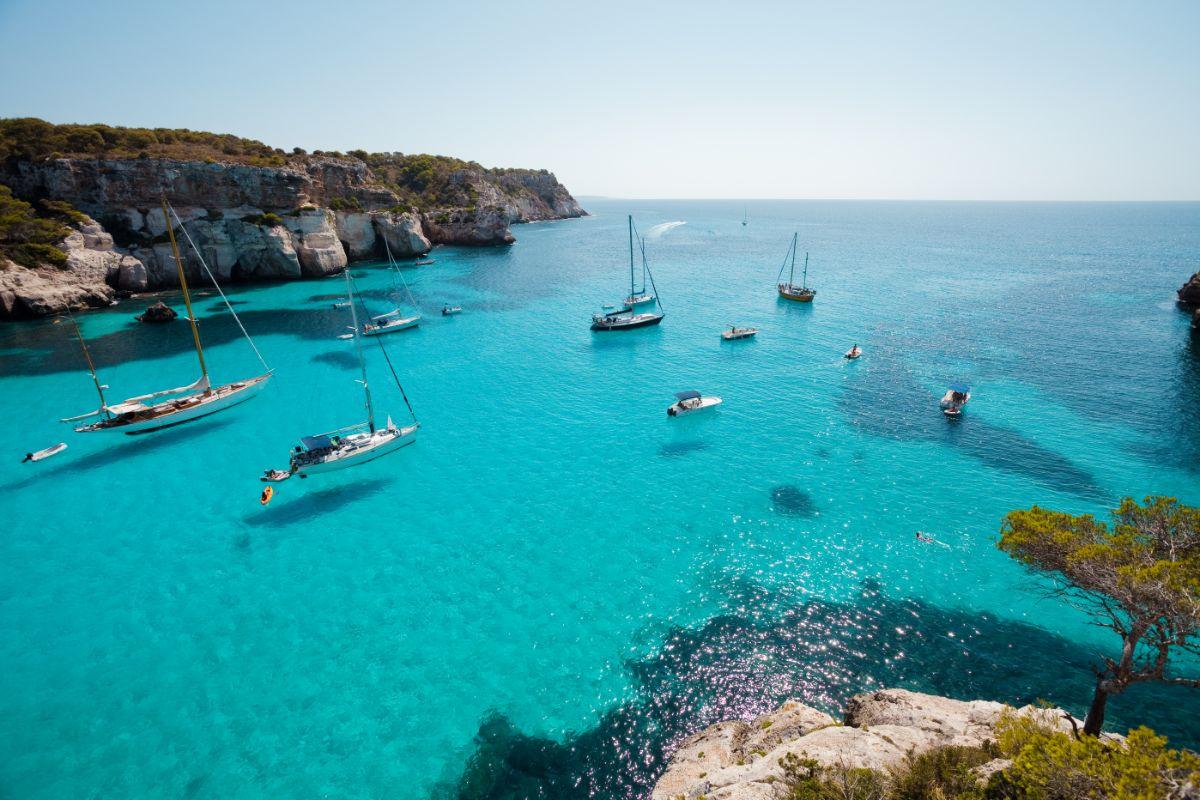
Menorca's beaches and coves (calas) are pure paradise.
You should rightly be very excited about them.
The best and most popular stretches of white sand are on the south coast, such as Cala Macarella, Son Bou and Cala Mitjana, but the more remote, rust-tinged beaches in the north, such as Cala Pregonda, are just as breathtaking. However, before you put anywhere on your own map, it's important to understand:
You won't be able to visit all the best beaches if you're here for a week or two.
Where you are on the island is an important factor in determining which beaches you can visit without your own transport.
The best pristine beaches are secluded, set in nature, without facilities and only accessible on foot.
Tip: An alternative way to reach the beaches is to take a half or full day boat trip, which usually includes time for swimming, snorkelling, lunch and access to some of the more famous beaches on the south or north coast. These tours depart from various accommodation locations.
How do you plan your itinerary in Menorca?
Menorca is very small - which is to its advantage - but it can also be deceptively tempting for a beginner.
Whether it's trying to cover too much ground in just two days with a rental car or underestimating the inaccessibility of large parts of the wild and unspoilt coastline, it's important to accept that you can't cover the whole of Menorca in a week (and you shouldn't try).
Instead, we recommend that you choose one part of the island (the south-east, the south coast, the north coast, a small town in the centre, or the towns of Mahón or Ciutadella) and explore mainly that area during the week - while relaxing, eating and lounging by the pool of course - with day trips by bus or with a hire car or scooter as required.
Why?
The island's unique geographical layout and road network make it difficult to cover too much ground. Many of the best places that can be reached independently with a car - those beautiful beaches and calas, as well as some pretty little towns - require a bit of driving and often some walking IN ADDITION to the road. You also have to consider that you want to walk that stretch of Camí, lie down for a few hours in that piece of paradise, indulge in that long lunch or savour that sunset, rather than getting back in the car and moving on to the next pin in your Google map.
How much time do you really need in Menorca?
A week is perfect for a holiday and a first visit to see the highlights, while 10-14 days would only be ideal if you are happy to travel slowly and love walking or beaches.
If not, it may be a little too long (but not unpleasant) given the leisurely pace and layout of Menorca.
If you opt for a fortnight in Menorca, we strongly recommend changing base after a week, so you can concentrate on getting to know the different parts of the island intimately and minimise repetitive driving.
Shorter visits are less common, but the size and connections of Mahón and Ciutadella make them good options for a long weekend or a spontaneous 4-day break in early or late summer.
While we are on the subject of these two cities, it is worth mentioning that on shorter trips you are unlikely to visit them both. Mahón lies to the east, while the old capital Ciutadella lies to the west.
Walk the Cami de Cavalls
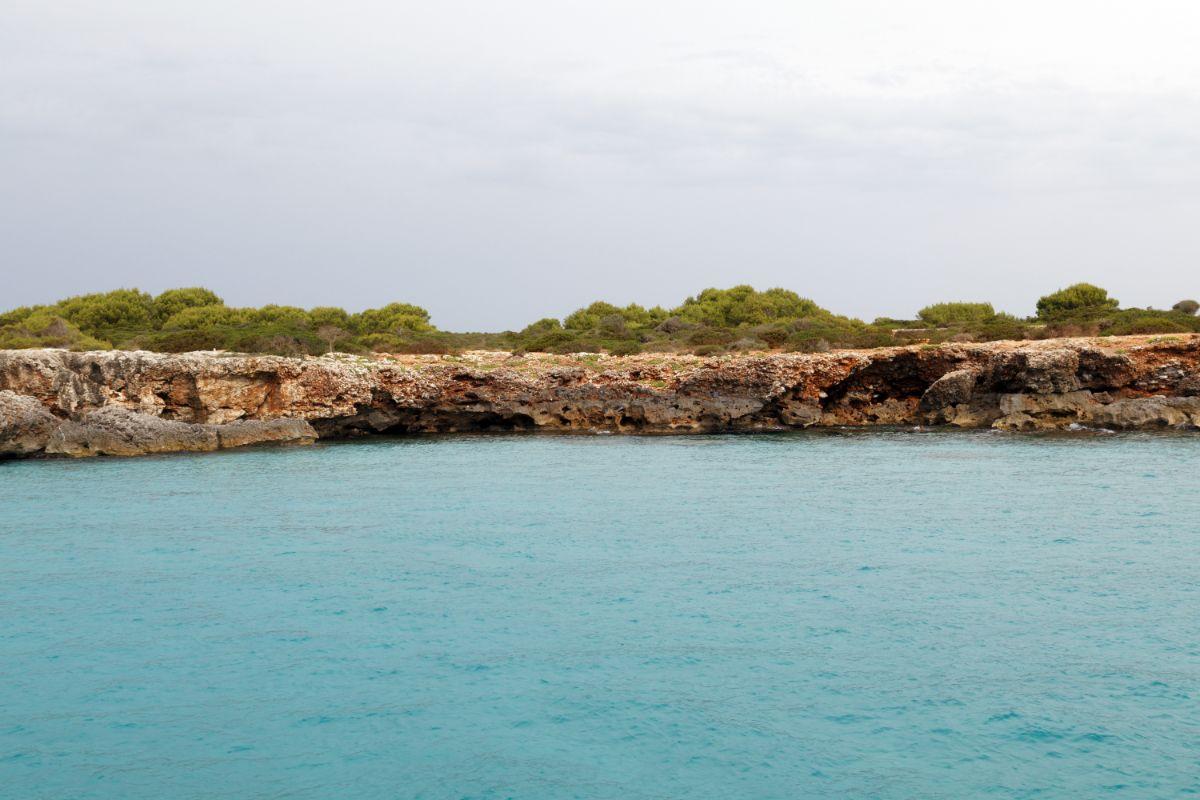
Menorca is an ideal place for hikers and those who love dusty roads.
One of the main reasons for this is the Cami de Cavalls, a 185 km trail that circles the island in twenty marked sections.
A haven for hikers, it also connects the coastline for those wishing to access or link up with remote, rustic beaches and calas.
As a multi-purpose trail - open to both long-distance hikers and occasional holidaymakers - it is an integral part of everyone's travels in Menorca (except for those who never leave their homes or the poolside).
Some people and groups arrive here with the specific aim of walking the entire trail over several days, but almost all of you will set foot on one or more sections of the Camí during your visit.
Choose your starting point carefully
What is the best part of Menorca?
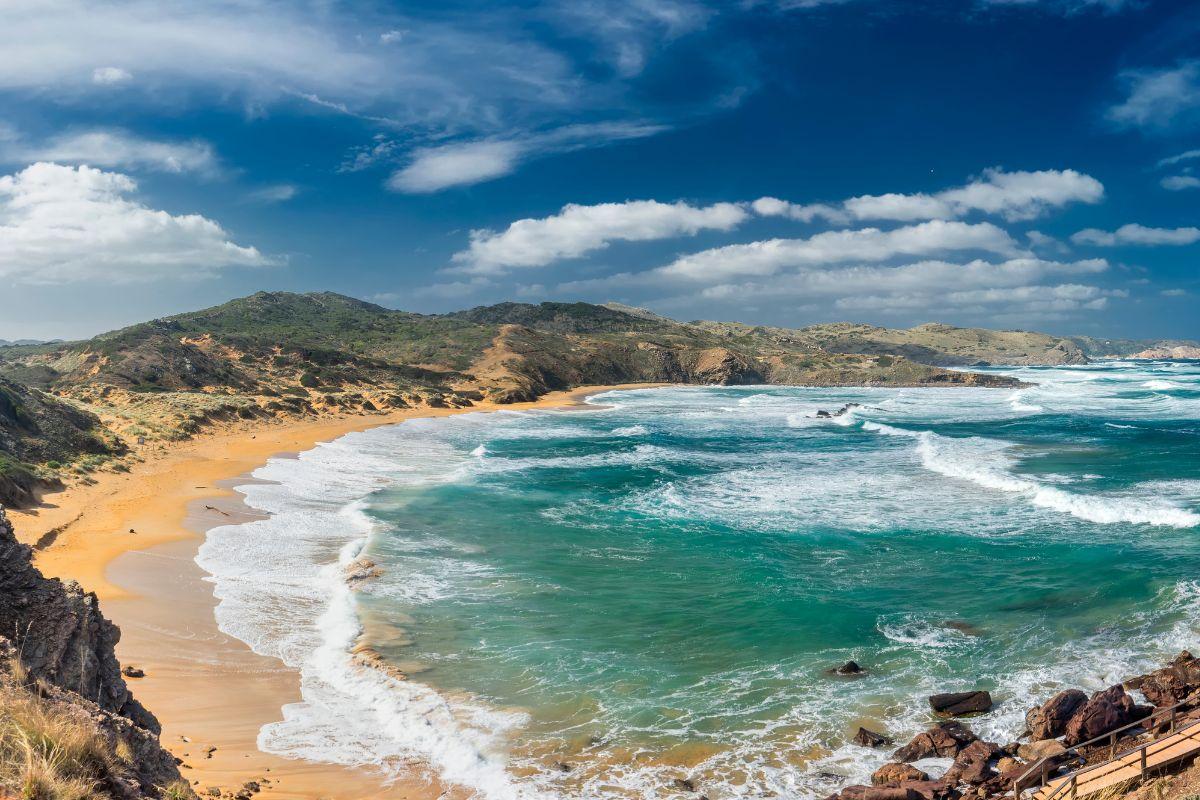
Most first-time visitors will want to head for the famous white sandy beaches of the south coast, which is also very well equipped for tourism.
The rugged north-west and north-east have several hidden gems, but they have fewer accommodation facilities and are somewhat less well served by public transport.
Staying in one of the three small towns in the interior of the island will appeal to some independent travellers as an alternative way of exploring the island, but it will not be realistic or attractive to those in holiday mode.
Finally, basing yourself in and around the towns of Mahón or Ciutadella offers several advantages over the coast, but it means you are not next to a beach!
It is important to note that there are a number of generic coastal 'resorts' that have definitely seen better days in Menorca. They cater more for package holidays and all-inclusive stays, and some of you will certainly want to avoid them.
Fundamentally, your choice of base on the island will really determine your experience of Menorca and what you can see and do, so don't just base it on the price of the flat.
Don't expect to stay in an Airbnb
For a whole generation of travellers, looking for accommodation on Airbnb is as natural as breathing.
Although you can find and stay in properties in Menorca on Airbnb, the coverage, type and availability are not like many other holiday destinations.
This is because the local government has introduced a series of regulations and licensing requirements for flat rentals, including limits on the number of days per year a property can be rented, the number of properties an owner can list, and the overall 'stock' of rooms/rentals available.
It is therefore difficult to criticise the substance of this measure to control unlimited rentals and the impact of unsustainable tourism growth on people, services and destinations.
This unfortunately means that some independent travellers who do not wish to stay in the defined tourist centres may be disappointed with the accommodation they can get in Menorca.
With large villas being unsuitable or too expensive for couples or small families, hotels become the most likely option for a number of locations, which may not suit the way you travel or choose to experience a place.
Similarly, the standard of some hotels in beach resorts is not very high.
However, this doesn't mean you can't find and rent legal Airbnbs in Menorca.
Regulation has also led to an increase in the number of hotels in Ciutadella that effectively act as Airbnb (i.e. you get a room but there is no reception or hotel facilities).
The ME-1 road is central to every trip
A short but very important point to help you better understand why, while much of the island is protected, much of Menorca's coastline is fairly inaccessible.
Although the island is small, its size is deceptive. The coastline is about 216km long, but it is not surrounded by a single tarmac road - instead there is the Cami de Cavalls, which is only accessible to walkers, horses and cyclists.
For motorists and buses, the island is split in two by the main tarmac road Me-1, and all journeys pass through here before branching off north or south to a town, a resort or narrow, dusty country lanes to remote beaches.
It's a bit of a fishbone system, with a single road running west to east from Mahón to Ciutadella, and lots of small, narrow branches.
This means that just looking at a map and proximity is misleading for Menorca.
For example, the coastal town of Cala Galdana is a popular option for accommodation, and really close to many of Menorca's best beaches. However, to get there by car, you have to drive north inland on the Me-1, west to Ciutadella, and then join the road back south to the coast - a journey that would take 5 minutes as the crow flies actually takes 45!
So, although small, navigating the island, where most of the best things to do are on the coast, is not as easy or quick as it sounds, and usually involves a trip in Me-1!
Public transport is pretty good
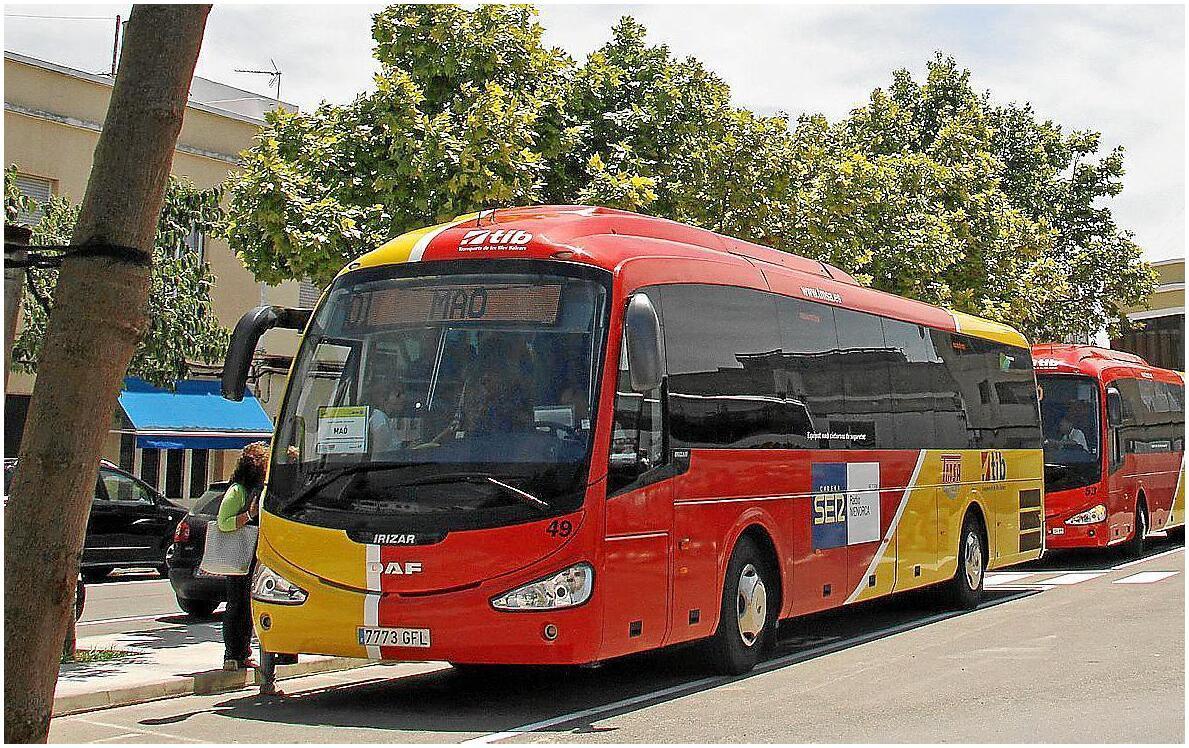
Menorca's public bus network is affordable, convenient and offers pretty good coverage for visitors. Indeed, in high season, travelling by bus is the easiest way to reach the island's most famous beach.
It is important to note that the network intensifies considerably during the summer season, with specific routes from Mahon and Ciutadella to the resorts or beaches only operating from May to 31 October or July to 31 October. If you visit during these months you will not notice any difference, but this is an important factor if you visit outside the summer season.
Some essential information to know in advance about buses in Menorca:
- For some journeys to/from the coast, you may need to go via the bus station in Mahón, Ciutadella, Ferreries, Es Mercadal or Alaior.
- The Mahón bus station is clear and direct, but Ciutadella buses leave and pick up at several different locations in the city.
- Payment is only made in cash to the driver. It is important to know the exact amount, but the driver will give change for "up to five times the price of a single ticket".
- You can only pay with tickets worth 5, 10 or 20 euros.
- In high season, for popular day trips or coastal routes, buses will be full; arrive early to ensure a seat and don't expect the last bus of the day from the beach to be available.
An excellent website for up-to-date routes, timetables and prices and it's also worth picking up the Menorca en Bus map from the tourist office to see coverage and connections.
Your own transport is essential for day trips
As we explain in this more in-depth post, many visitors to Menorca will not need to hire a car.
For others, it will be an essential ingredient of their island experience.
Although the bus network is quite good, it will not meet all your needs if you plan to visit certain beaches, cover several parts of the island in one day, avoid the crowds of the high season or have the utmost flexibility to determine your own itinerary and day trips beyond what the bus schedules allow.
The best place to get a quick and reliable overview of car prices and availability, and to book in advance, is Rentalcars.com.
You can also forget about buses, roads, taxis and rental cars and spend your money on hiring a boat for the day!
It is very, very easy to hire and drive a boat in Menorca for the day without a licence or experience, and it is a popular way for tourists to visit the beautiful beaches of the south coast!
The whole island is a biosphere reserve
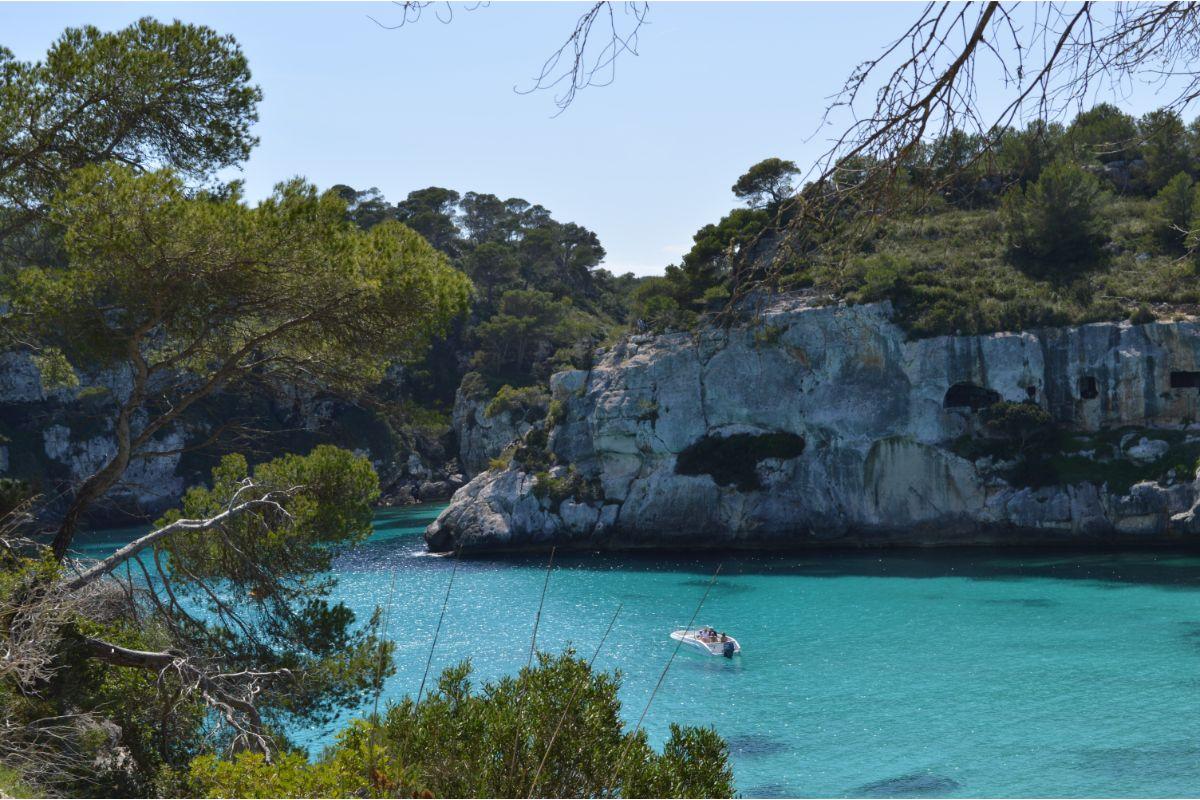
There are almost 700 UNESCO biosphere reserves in the world.
They are defined as places where "human activity is developed in a manner compatible with the conservation of natural resources and cultural heritage", with the primary aim of establishing a scientific basis for improving the relationship between people and their environment.
Menorca was designated in 1993, and it is one of the key factors - along with Franco's sentence - that has allowed the place to retain its rustic natural appeal with swathes of unspoilt rural landscape, rather than turning into a large concrete resort.
On the island, there is a sincere and focused attention to issues of sustainable development, environmental concerns, preservation of ecosystems and conservation of the island's natural and cultural heritage.
For the average visitor, this translates into government measures to regulate urban sprawl and tourist accommodation, control of Airbnb, tourist tax and various measures against unsustainable tourism (including limiting the number of visitors to car parks and some beaches in high season).
In addition, around 40% of the island's surface area is designated as a natural area of special interest, including the wetlands of S'Albufera des Grau, while the Northern Menorca Marine Reserve was created in 1999 to preserve marine species and sustainable development.
Recycling, respect and responsible tourism
Tourism is Menorca's main economic resource, and the total human population can almost double in high season. It is essential that all travellers + tourists act responsibly, with respect, and support local efforts to maintain the right balance and the environment.
Here are some key actions you can take:
Participate in the recycling programmes on the island. Large colour-coded bins can be found in all towns and resorts, as well as near the more developed beaches, and it only takes a little effort to sort and dispose of your waste.
Green for glass (vidrio), yellow for cans, tins and plastic bottles/containers, blue for cardboard and paper.
Pristine beaches such as Cala Pregonda and Cala Macarelleta have no facilities or bins, so it is your responsibility to leave no trace and take your rubbish with you until you find a suitable bin or recycling area.
Water is scarce in Menorca. Try to keep your showers short and avoid leaving the taps running as much as possible.
This may seem like a really pedantic point, but not putting your towels out to dry on balconies is appreciated by residents of some towns and resorts.
Respect signs indicating private land, hunting grounds ('Coto Privado De Caza') or residences when walking along the Camí and the coastline, as well as farmland and private houses.
Menorca is a place for seafood and cheese lovers
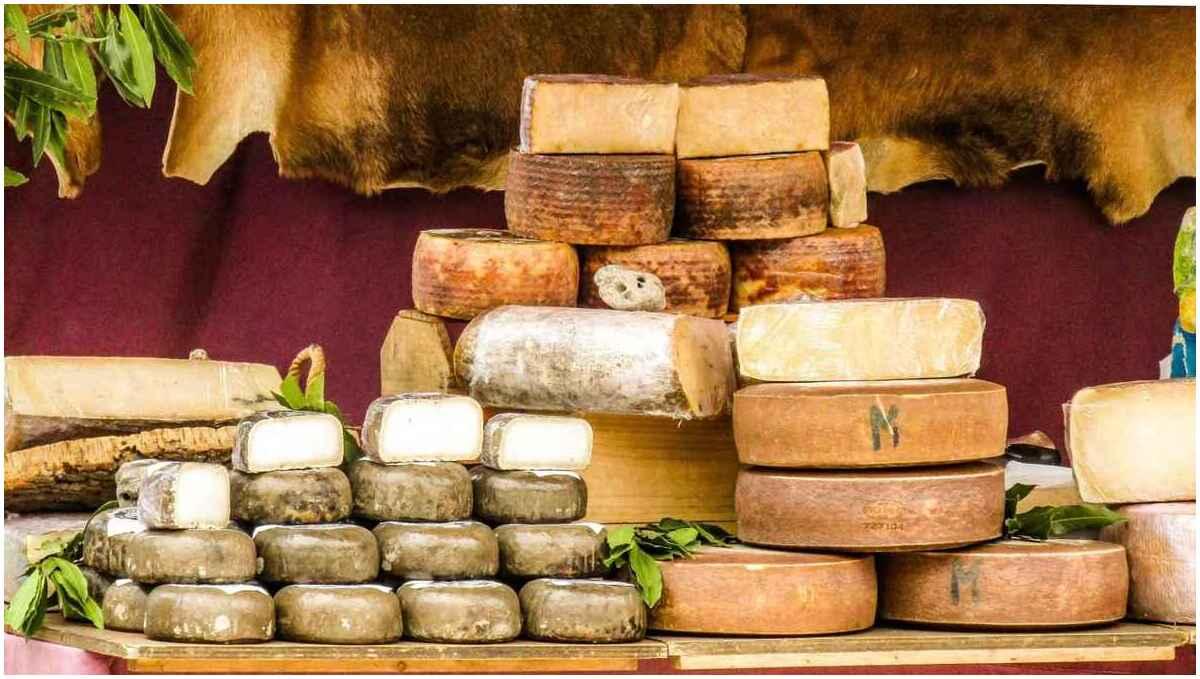
The island has a thriving reputation for gastronomy, thanks to Michelin-starred Menorcans returning from mainland Spain or the UK, who align themselves with the local, small-scale KM0 food culture that is deeply rooted in the rusty red soil.
The flagship products are cheese and seafood, and as you drive around you'll see plenty of green 'Queso directo en venta' signs directing you to the small farms where you can buy their cheese directly.
It's important to note that strict vegetarians and vegans will have a bit of trouble. There are a growing number of vegetarian and vegan restaurants in the capital and Ciutadella, as well as menus with better options, but on the whole the island's traditional palate is heavily weighted towards the incorporation of seafood, cheese and meats.
This extends to the Ensaimada - a delicious Balearic pastry, which you'll see everywhere (especially in Es Mercadal).
Shop strategically for big ticket items
Supermarkets on the outskirts of Mahón and Ciutadella are significantly cheaper - by at least 50% for many items - than the small, convenient but expensive supermarkets found in the tourist centres.
We strongly believe that you should invest your money in local businesses as much as possible, and these small supermarkets will always be ideal for stocking up in the kitchen of your accommodation or for snacks on your day trip or day at the beach.
However, the differences in cost per item mean that you will save a significant amount of money by doing your 'big ticket' shopping outside of either city if you are staying and looking after yourself for more than 7 days or if budget is an issue. This is obviously easier if you have your own rental car.
Get up early to go to the beach in high season
If you are driving or taking public transport for a day trip to the most popular beaches in high season, it should involve an early start.
The free beach car parks will fill up by 10 or 11am, while seats on the crowded buses will be scarce. If you start too late, you may be disappointed and change your plans, or have an uncomfortable experience in the crowds.
We don't advocate getting up at 6am on holiday or anything, but rather planning a little the night before to find out about connections and journey times, rather than waiting until 11am to make a plan.
The wind in Menorca is important
There is one really vital and specific element to Menorca that most visitors will not realise.
Everything on this island is shaped by the wind, and locals make beach plans based on the direction it blows.
The golden rule is: if the tramontana wind is blowing from the north, go to the beaches and towns in the south! If the wind is blowing from the south, go to the beaches and towns in the north!
It may not look like it on a calm, clear summer day, but when the wind comes in strong, it can really batter the coast.
Outside of beach days, it is absolutely essential to check the forecast and winds if you are considering hiring a boat in Menorca or taking a boat trip; if conditions are bad, a refund or cancellation is not guaranteed, but the feeling of having wasted money absolutely is.
For accurate wind direction and speed forecasts, use Windfinder.
You'll have to switch to Spanish time
In Menorca, the afternoon siesta is truly king; for stays of a week or more, it's not a bad idea to set your body clock. Otherwise, you'll simply be one of the many tourists choking at 3pm in the city.
Many shops, businesses, restaurants and cafes close at around 2pm and reopen between 4 and 5pm. Some restaurants, however, reverse the trend slightly, opening from 12-1pm until 4pm and then from 7pm until late.
Eating later in Menorca (i.e. from 8pm or 9pm) is also the best way to avoid being the only one in an empty, but popular restaurant... but it at least increases your chances of getting a table in high season!
What you need to know about eating out
It is essential to book not only for well-known places like Bambu in Binibeca Ivette in Cala Morell or Binifadet just outside Sant Luis, but also for any restaurant with a good rating on TripAdvisor.
If you're traveling as a couple, don't care too much about where you eat or are prepared to wait for a table, you can get away with showing up, but in most cases - or if you're keen on a particular place - you should book in advance.
In the height of the summer season, we recommend that you book almost everywhere - sometimes up to two days in advance - especially if you're eating at the weekend.
The good restaurants, rather than the much less quality-oriented ones in the super-commercial resorts like Cala en Porter, are quite expensive.
There are of course some exceptions to this rule, including the excellent fish market in Mahón and some lower quality restaurants aimed at tourists, but bear this in mind.
FAQs on visiting Menorca
What time do the shops close in Menorca?
If you want to shop, it is useful to know that normal opening hours are from 10:00 to 13:30 and 17:00 to 20:00, Monday to Friday, while on Saturdays the shops are only open in the morning.
Can I drink tap water in Menorca?
Tap water in Menorca, which comes from the public network, is generally drinkable. If this is not the case, the water supplier must inform the inhabitants. As in Mallorca, the taste and perception of local tap water is very bad. That is why almost everyone drinks bottled water.
Is there much crime in Menorca?
Because Menorca is small, quiet and community-oriented, it is much safer than most destinations. The crime rate is low, neighbours look out for each other and the people you come into contact with on a daily basis are refreshingly honest.
Menorca or Majorca?
As Mallorca has long welcomed more tourists than Menorca, there are generally more facilities and entertainment options. But this also means that its beaches can be much busier. Menorca is Majorca's smaller, quieter and less crowded sister.