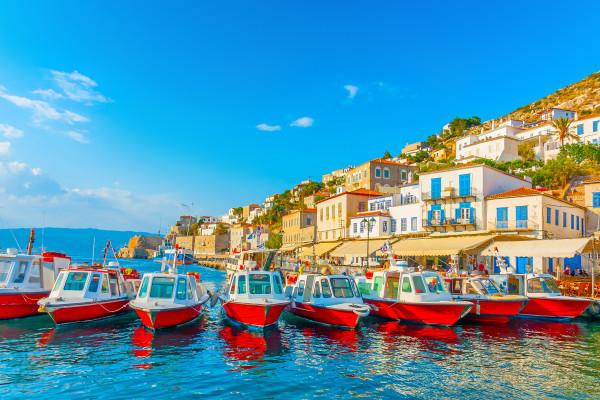
Santorini is the undisputed star of the Greek islands, one that turns heads and that everyone recognises around the world: multicoloured cliffs emerge from underwater caldera, framed by wind-washed white buildings. With its reputation for breathtaking views, romantic sunsets and volcanic sandy beaches, it is no wonder that the sea of Santorini appears on many travellers' wish lists.
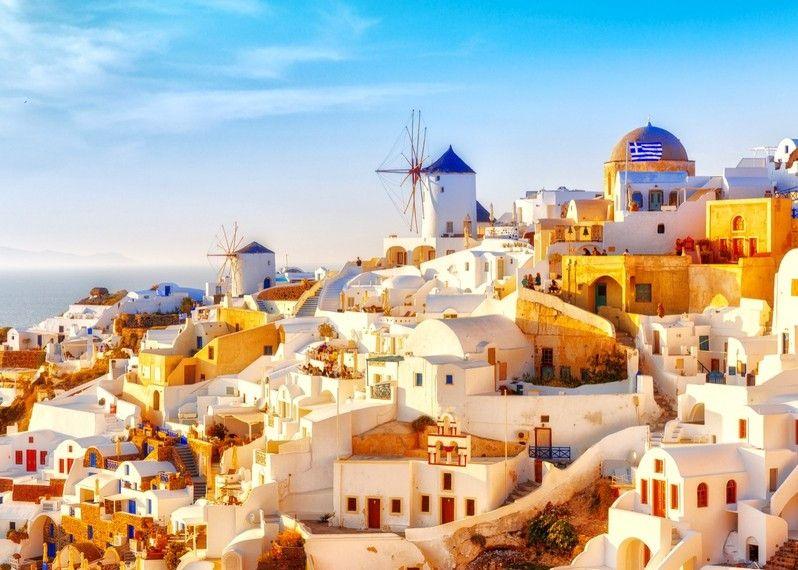
The unmistakable view of Santorini, Greece. ©mitchFOTO/Shutterstock
Where to go in Santorini: a bit of history, trivia and itineraries
And it is impossible to ignore the uniqueness of this destination, whose charm attracts up to 1.5 million tourists every year. Here, then, is everything you need to know if you plan to join the group.
The volcanic history of Santorini
Part of the Cyclades Islands, Santorini (officially known as Thira, a name that encompasses the group of islets orbiting Santorini) is located in the Aegean Sea, roughly halfway between Athens and Crete.
The shape of the island is reminiscent of a croissant, while the islets that surround it suggest that Santorini was once circular, after all it was known as Strongili (the round). Thousands of years of colossal volcanic eruptions have caused the centre of Strongili to sink below sea level, while the caldera with its rock towers on the eastern side have become the island's defining feature.
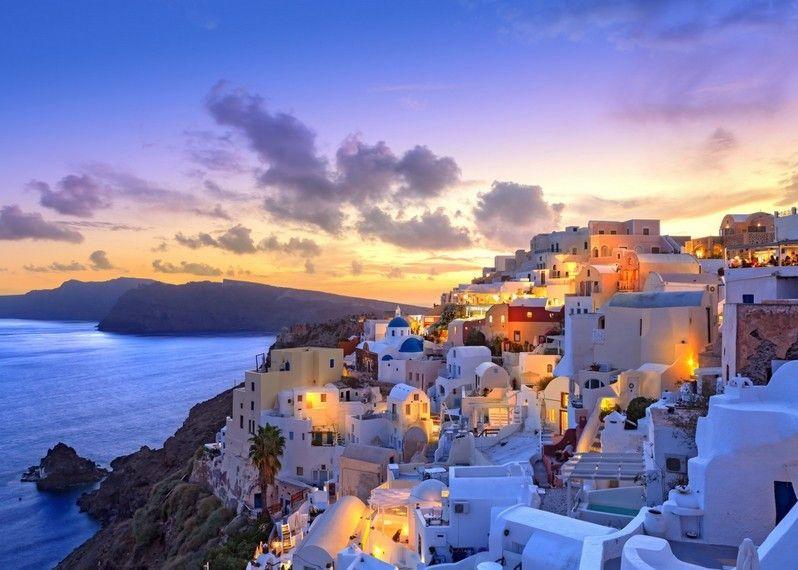
The sensational sunset seen from Oia. ©Grafissimo/Getty Images
Must-see villages and hamlets in Santorini
Santorini's commercial development has been concentrated on the slopes of the caldera to the west of the island, with large clusters of whitewashed buildings nestled at dizzying heights that spill over the cliffs and offer incredible views from both land and sea.
Fira, the island's bustling capital, stretches north to the villages of Firostefani (about a 15-minute walk from Fira) and Imerovigli (the highest point of the caldera, about a half-hour walk from Fira). A path dotted with elegant hotels, terrace restaurants and photo opportunities runs through both. Most visitors head for these three settlements and the beautiful and exclusive village of Oia, in the north of Santorini. An increasing number of tourist accommodations are, however, growing in the southern area, which offers views of the north and north-east sides of the caldera. The view from Akrotiri is less expensive than from Oia, but it is a good compromise to get in on the action in Fira.
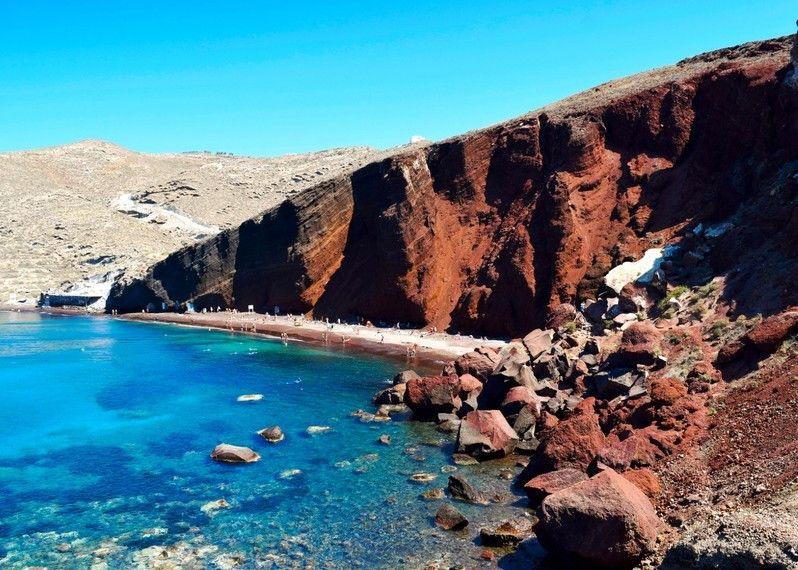
The Red Beach, Santorini ©Emma Shaw/Lonely Planet
Santorini's best beaches, east
The area east of Santorini is less well known than the celebrated west coast. Here the crater peaks soften to sea level and volcanic sand beaches like Kamari and Perissa offer a more typical (and more affordable) island charm: beaches with umbrellas, water sports and promenades overflowing with tavernas. Beaches on the east coast have black sand beaches, while to the south is a strip of beaches with multi-coloured sand and the dramatic Red Beach is a favourite with visitors. The interior of the island is dotted with vineyards and traditional villages that offer glimpses beyond the more touristy. Stop in Pyrgos for a bite to eat and a stroll through its charming streets.
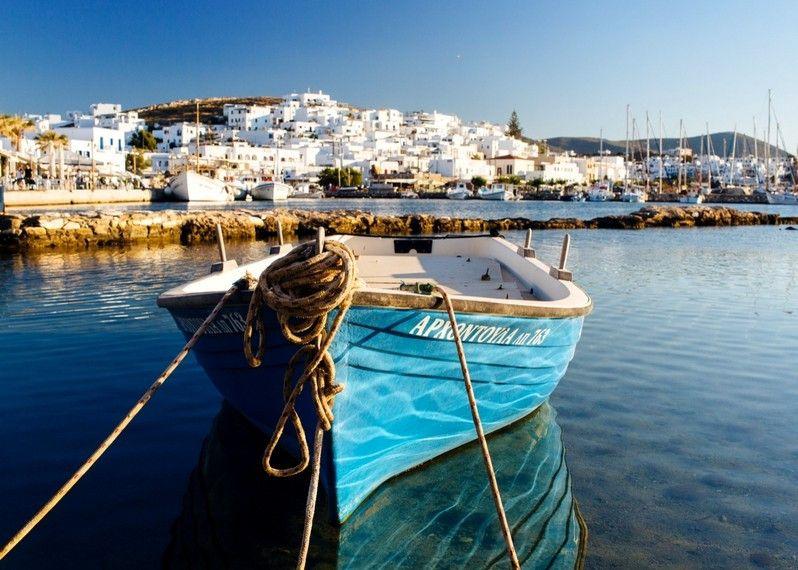
Fishermen's boats at the marina, Santorini. ©Adrienne Pitts/Lonely Planet
Sign up for our newsletter! For you weekly travel tips, special offers, stories from around the world and 30% discount on your first order.
What to do in Santorini: 7 activities
Trekking in Santorini
The most common activity is a walk along the edge of the crater to admire the view. The walks around Fira are spectacular, especially if you head north to Firostefani and Imerovigli along the crater rim path. If you keep walking you will reach Oia, but don't take the route lightly: the path is quite intense, is 9 kilometres long and takes 3 to 4 hours to reach your destination.
Greek Wine Tasting
The wines of Santorini are dry whites or amber dessert wines such as vinsanto. Both are made from the indigenous assyrtiko grapes. About a dozen local wineries offer wine tastings and small meals with an impressive combination of enchanting scenery and excellent products.
The museums of Santorini
Santorini's intrigues have their roots in the ancient past, at the fascinating site of Akrotiri, a Minoan city destroyed by volcanic eruption in 1613 BC. In Fira, the Prehistoric Museum of Thera helps to piece together the history of ancient Akrotiri.
Where to admire the most beautiful Santorini sunsets
When sunset comes, the wonders of nature are visible from anywhere along the seafront, but the perfect spot to watch the sunset is at Oia, where thousands of tourists arrive every evening to admire (and applaud) the sunset.
And where to swim
Take a dip: whether in the hotel's infinity pool or in the private pool of your suite, whether from the deck of a boat on a cruise or on the black beaches of the east coast. It is always worth it.
Most interesting tours
Every tour you can imagine is feasible. There are dozens of agencies ready to help you organise winery visits and archaeological tours, while classic itineraries take you to the volcanic islands of Nea Kameni and Palia Kameni with a stop at the crater and hot springs.
Santorini surprises
You will undoubtedly encounter many famous attractions, but far from the best-known sights, there is much more to explore. From fantastic open-air cinemas to interesting micro-breweries, wineries transformed into art galleries and cooking classes celebrating Santorini's growing passion for food.
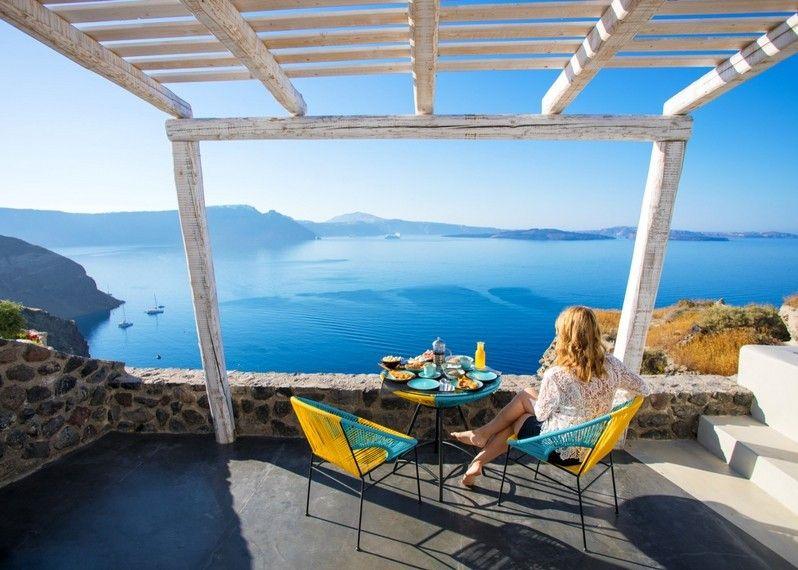
Breakfast with a view, Santorini, Greece. ©grinvalds/Getty Images
How to plan a trip to Santorini: practical information
Where to sleep in Santorini
If you can afford it, your first time on Santorini should be spent at the top of the caldera to experience the 'wow' factor. Fira, Firostefani, Imerovigli and Oia offer hotels and villas with whitewashed interiors, terraces and pools that have inspired endless wedding proposals, high-fashion photo shoots and plenty of Instagram shots. Unfortunately, there are not many low-cost options in these locations: accommodation with views of the caldera is expensive and in high demand (if you are interested, book well in advance). Cheaper options are available in Fira and Firostefani (not so much in Imerovigli and Oia) away from the first row on the panorama. There are also numerous cheap hostels and campsites (also with rooms) around Fira.
If you prefer beaches and outdoor activities, stay in Perissa or Kamari (from where you can take a bus to Fira). The advantage of these locations is a bit of quiet away from the caldera fans and reasonable prices.
When to go to Santorini
The peak period is from July to August, when prices rise and the viewpoints and beaches are packed with tourists. April to early June or late September to October is a good time to visit Santorini: things are a little quieter, especially on the east coast (where there is no shortage of reasonably priced accommodation).
Don't despise a winter break, when the tourists are few, the prices low and the views sensational. Santorini is in fact working towards becoming an attractive year-round destination.
Read also: