I spent a month in Malta researching its rich and varied history, culture and cuisine for the Lonely Planet guidebook. It was my third time visiting the island. Malta is one of the most fascinating destinations in the Mediterranean and will always remain among my fondest travel memories.
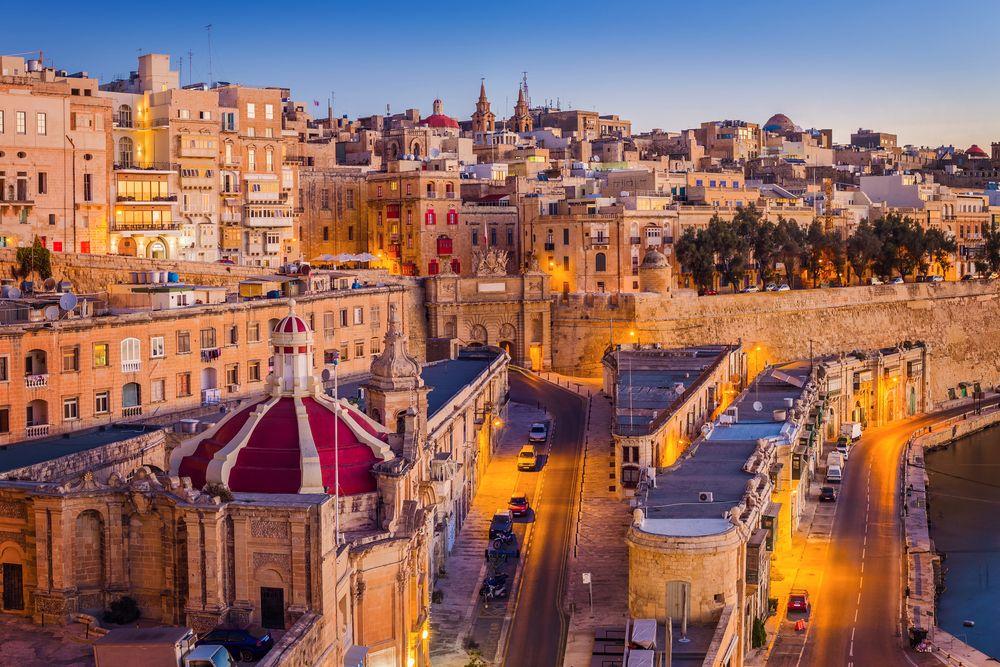
Malta, houses and walls of Valletta. Credits ZGPhotography / Shutterstock
Why go to Malta
Located in the heart of the Mediterranean, Malta is one of the smallest countries in Europe, yet it boasts a wealth of attractions: sites with fascinating history; relaxing or stimulating outdoor activities; and a culinary scene influenced over the centuries by various cultures and empires. Explore the superb artistic and architectural heritage of the Knights of St John in Valletta's old town, then explore the capital's most popular cosmopolitan restaurants and bars. In Gozo and tiny Comino, hiking or kayaking is the best way to appreciate the rugged coastline of the archipelago's smaller islands.
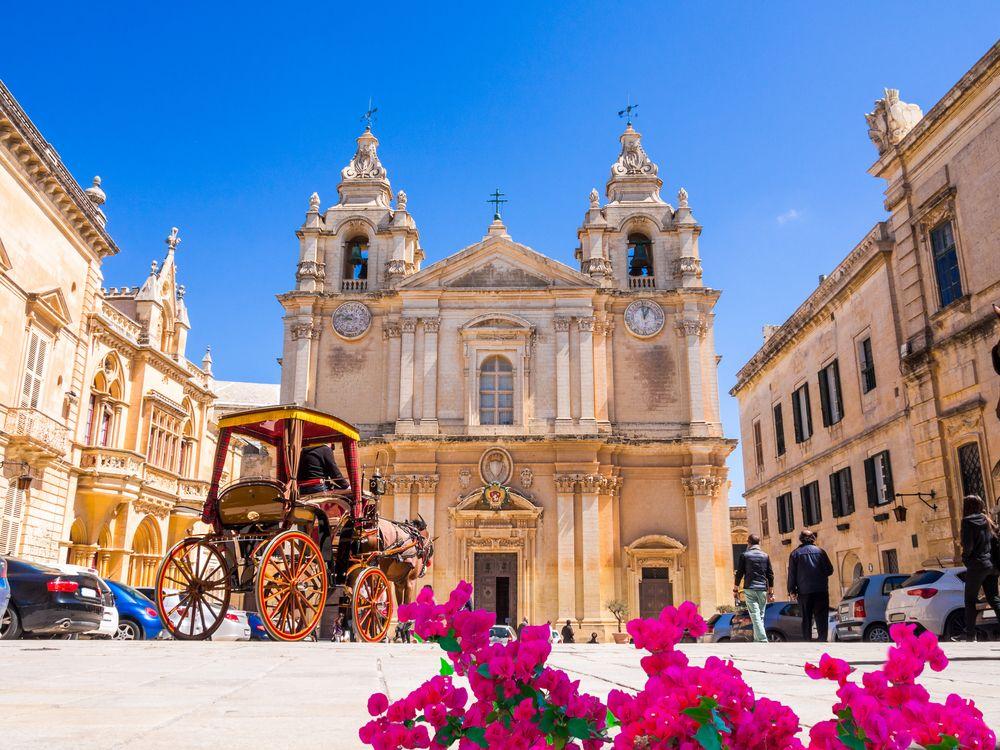
St Paul's Cathedral in Mdina. Credits Cristian Mircea Balate / Shutterstock
The best time to visit Malta
Intermediate Season
(March-May and September-October)
Avoid the summer heat and crowds.
You will be able to take advantage of cheaper rates in accommodation facilities.
You will be able to witness the traditional festivities of Holy Week and Easter.
Events involving fireworks, culture and music take place during these months.
Daily Budget
Double room in a mid-range hotel: €110-160
Dinner in a local restaurant: €30-50
Admission to museums: €5-10
Glass of wine: €7
Pint of beer: €6
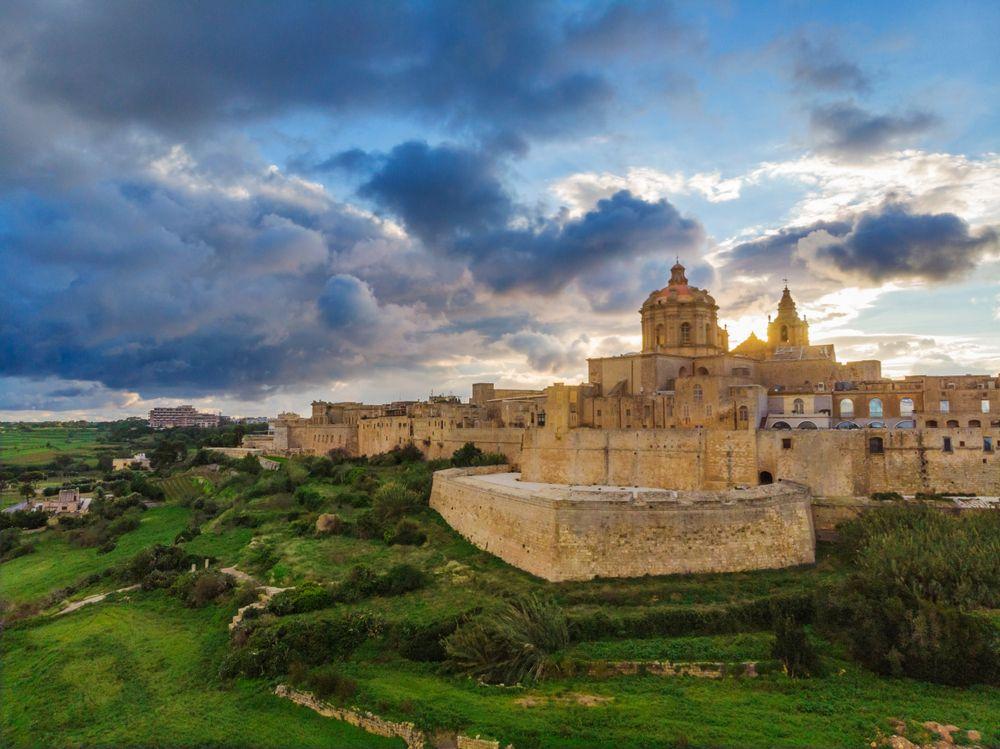
The sky above Mdina. Credits Karina Movsesyan / Shutterstock
Day 1: culture, gastronomy and history in the capital
With an area of less than one square kilometre, Valletta is the smallest capital city in the European Union. Before you begin your tour of this compact peninsula, cheer yourself up with a fair-trade coffee at Lot Sixty One, whose outdoor tables offer views along Old Theatre St to the shimmering waters of the Mediterranean. Built between 1573 and 1578, Saint John's Co-Cathedral was the place of worship of the Knights of St John during their rule in Malta, which lasted until 1798. Among the cathedral's treasures is Caravaggio's painting The Beheading of St John the Baptist. Wander the streets lined with honey-coloured stone houses for lunch at Nenu the Artisan Baker, where you can enjoy a delicious ftira, a traditional flat bread baked in a wood-fired oven and garnished with capers, olives and herbs.
European Capital of Culture in 2018, Valletta also boasts more recent buildings, including the Parliament Building and the imposing City Gate, both designed by Renzo Piano. Continue to nearby Upper Barrakka Gardens, where a cannon shot is fired every day at 4pm from the Saluting Battery, a row of cannons traditionally used to greet incoming ships. From here, the view sweeps over Grand Harbour to historic Fort Saint Angelo. After an aperitif at 67 Kapitali, a popular bar serving craft beers from Gozo's Lord Chambray Brewing, head for dinner at Noni, a Michelin-starred restaurant with centuries-old stone walls. Focusing on local and seasonal flavours, the menu features dishes such as rabbit confit with poached figs.
Sign up for our newsletter! For you weekly travel tips, special offers, stories from around the world and 30% off your first order. 30% discount on your first order.
Day Two: Mdina's labyrinth of alleyways and zero-kilometre cuisine
From Valletta's bus station, take bus No 52 inland for the 30-minute journey to Rabat. At the Crystal Palace Bar (Is-Serkin) have breakfast with pastizzi, the traditional savoury filled pastries that are a typical Maltese snack. From the nearby Howard Gardens, cross the bridge over the grassy defensive moat to the fortified town of Mdina. Spend the rest of the morning exploring the narrow alleyways that lead to shady squares and raised terraces with superb views across the island. Saint Paul's Cathedral in Mdina was built in the 12th century, while Rabat's ancient Christian crypts and catacombs date back some 900 years earlier.
After sampling Maltese wine and cheese at Rabat's popular Ta' Doni, take bus 201 west to the remote Dingli Cliffs, a wild, windswept promontory where you can hike; don't stray off the well-marked coastal paths. Make a stop at the Cliffs Interpretation Centre to learn more about the region's unique natural, geological and archaeological heritage. From here, take an easy walk to the village of Dingli and dine at the zero-kilometre restaurant Diar il-Bniet (reservations are recommended for both lunch and dinner; the restaurant also organises cooking classes). After dinner, return to Valletta by bus No 52 and have a nightcap at Yard 32, a gin bar with a cosy atmosphere located on Strait St, the hub of Valletta's historic nightlife.
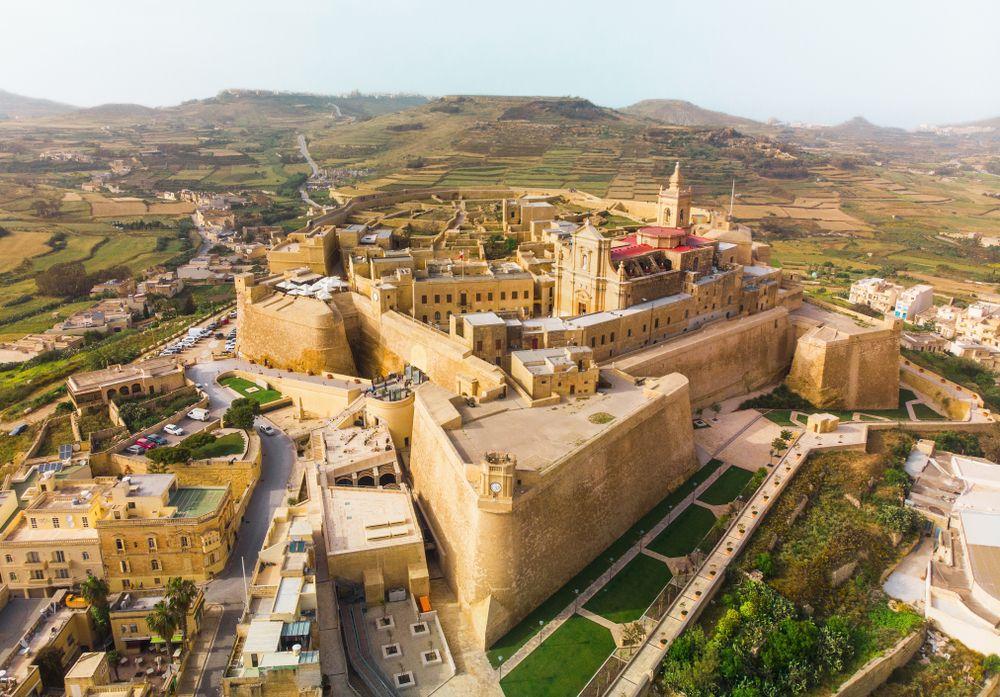
The Citadel of Victoria, Malta. Credits Karina Movsesyan / Shutterstock
Day Three: The ancient citadel of Gozo and sunny vineyards and olive groves
From Valletta's waterfront, take the Gozo Fast Ferry to Malta's second, smaller and less populated island. A 45-minute crossing in a north-westerly direction takes you to the port of Mġarr in Gozo, where you can hire scooters, electric bikes and cars to explore the island on your own. From the harbour, a 22-km drive leads to Gozo's capital, Victoria, whose pedestrianised side streets are lined with self-catering flats that provide a good accommodation option; many have sunny roof terraces.
Rising above Victoria is Il-Kastell, the citadel that protected the citizens of Gozo from Turkish incursions until the 16th century. Today, the complex houses a nature museum and an archaeology museum, and its fortified walls overlook the island's terracotta-coloured landscape. Inside the citadel, Ta' Rikardu sells local produce including cheese, wine and honey - shop and then enjoy them outside once you return to your accommodation.
After exploring Il-Kastell, discover more of Gozo's food and wine resources by visiting the Ta' Mena Estate. This family-run business located a few kilometres north of Victoria has a shop selling wines - including the indigenous Girgentina and Ġellewża grape varieties - and locally produced olive oil, as well as capers and sun-dried tomatoes. Saturday morning tours begin with an exploration of the olive groves and vineyards of Ta' Mena and conclude with a food and wine tasting.
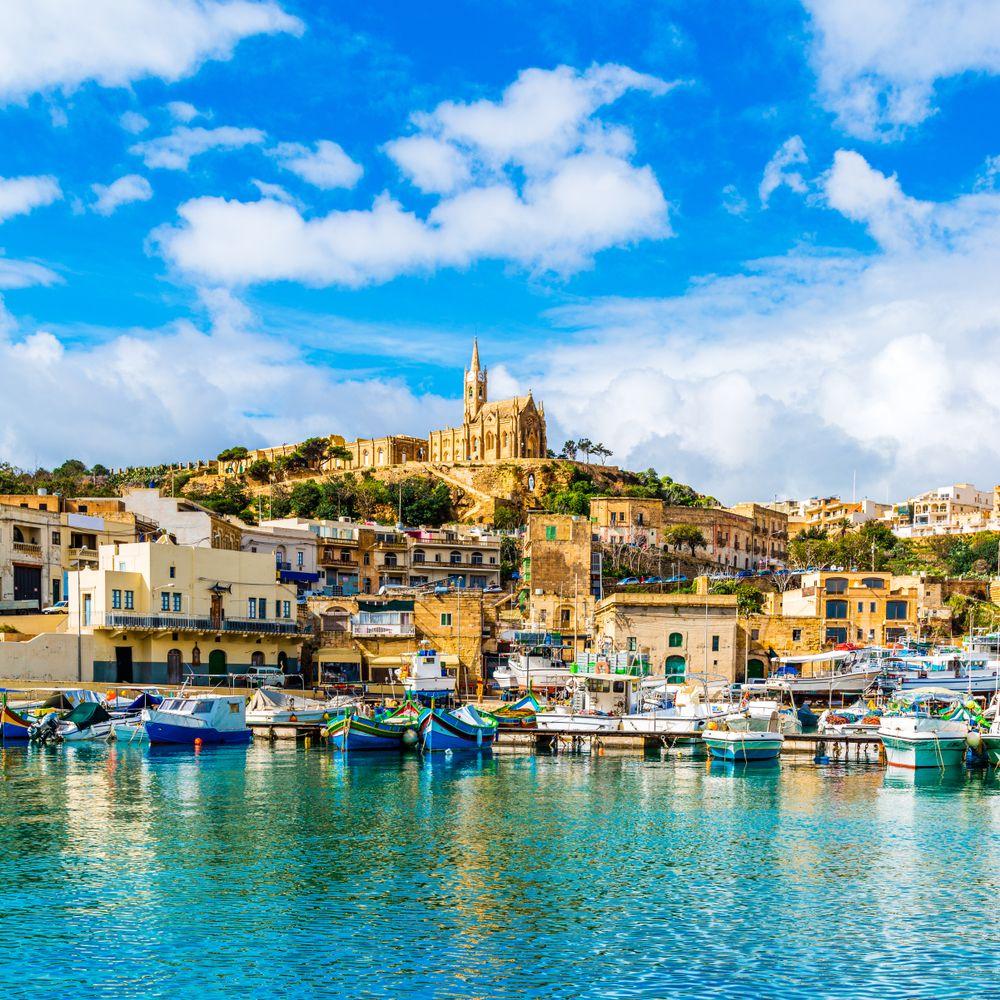
Mgarr, island of Gozo. Credits Benno Hoff / Shutterstock
Day Four: Discovering the rocky coastline lapped by cobalt waters
After a great meal these first few days, it's time for some physical activity along Gozo's rocky coastline, dotted with paths running along cliff tops, narrow coves, sea caves and coastal formations eroded by wind and sea. Abseiling, rock climbing, hiking and mountain biking can be organised with Gozo Adventures , while half-day kayaking trips allow you to explore the rugged coastline of Comino, Malta's third largest island.
Another very tempting option is to explore the wilderness of Gozo for a day in your own vehicle. South of Victoria, Mġarr ix-Xini was once the main port of the Knights of St John in Gozo; an ancient stone watchtower still protects the narrow inlet bordered by cliffs. Departing from Mġarr Harbour, Mġarr ix-Xini is also a stop along the Xlendi Walk, a 12 km coastal path along the rugged cliffs and spectacular bays that line Gozo's south coast.
A major attraction in western Gozo is Dwejra Bay, also criss-crossed by coastal paths. Here stood the Azure Window, a stone arch that collapsed into the sea in 2017. Despite the disappearance of the arch, the coastal landscape of Dwejra remains impressive and spectacular. Boat trips cross the Inland Sea, a lagoon bordered by cliffs with a tunnel leading to the open sea.