 One is inclined to think that Sri Lankan cuisine is similar to Indian cuisine. In reality, Sri Lanka has developed its own national cuisine as its heritage and culinary traditions derive from the mixing of local produce with recipes and products brought to the island over the centuries by Indians, Arabs, Portuguese, Dutch and British.
Thestaple dish is the almost ubiquitouscurry rice, which accompanies meat, fish and vegetables. The basic ingredients are also fish, coconut and fruit. A mix of contrasting flavours, testifying to the fact that, par excellence, this is the island of spices.
Sinhalese cuisine is extremely spicy. If you don't like it, it is a good idea to warn the restaurant staff when ordering, or opt for the convenient buffets where there is always something neutral (plain rice, grilled chicken).
Street food is an essential part of the local cuisine and, wandering around the country, one often comes across stalls selling samosas and vadai.
Here are the typical Sri Lankan dishes.
10 Typical Sri Lankan Dishes
1 - Curry and mixed rice
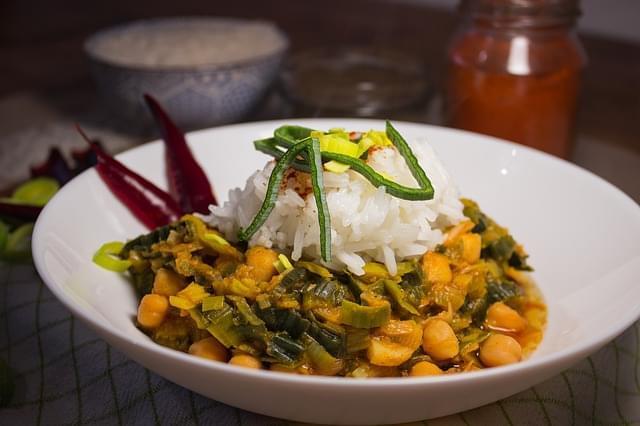 Curry rice is ubiquitous, a bit like bread in our country. It is available in any café or restaurant, it is cheap and nutritious.
Curry means a mixture of fresh spices and herbs blended together, to which an inordinate amount of chilli pepper is added.
The rice+curry combo is the base; there are many variations. The simplest form involves a mound of rice with a few spoonfuls of vegetable curry, dhal, a piece of chicken or fish on top.
The more sophisticated version, on the other hand, involves a portion of rice accompanied by at least 7 side dishes, a big meal inspired by the Dutch rijsttafe.
Rice and curry you will find everywhere, get used to it, you will start eating it already on the flight out and, once at your destination, you will be amazed that locals already eat it for breakfast!
Recommended for: always
Average cost: from €0.50 for the basic version, price increases if you add meat or fish
Main ingredients: rice, curry, meat, fish, vegetables
2 - Deviled sweet and sour fish curry
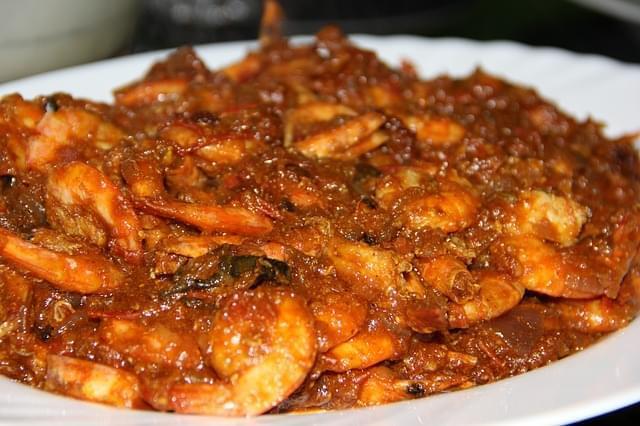 Spicy (or deviled) dishes are also very popular. These dishes are usually prepared with a thick, spicy sauce, large chunks of onion and chilli, where the main ingredient is then cooked by dipping it in this sauce.
In the specific case of Devil sweet and sour fish, the fish is fried, then dipped in a sweet and sour sauce, and then fried again together with red onions, peppers and bananas.
Excellent when accompanied with some fried rice or a paratha (Indian flatbread-like bread).
Recommended for: lunch, dinner
Average cost: €7.00
Main ingredients: fish, onion, chilli
3 - Lamprais
Many traditional dishes have been influenced by the country's colonial past. One example is this dish of Dutch origin.
It consists of boiled rice in broth accompanied by frikkadels (meatballs), a mixed meat curry, aubergine curry and sambol.
All these ingredients are then wrapped in a banana leaf together with various spices including cardamom and cinnamon and baked. In some versions, eggs, vegetables and pickles are also added.
Given its richness and the time required to cook it, lamprais is generally prepared for special occasions when a large gathering of friends and family is planned.
Recommended for: lunch, dinner
Average cost: €12.00
Main ingredients: rice, meat, egg
4 - Dhal curry
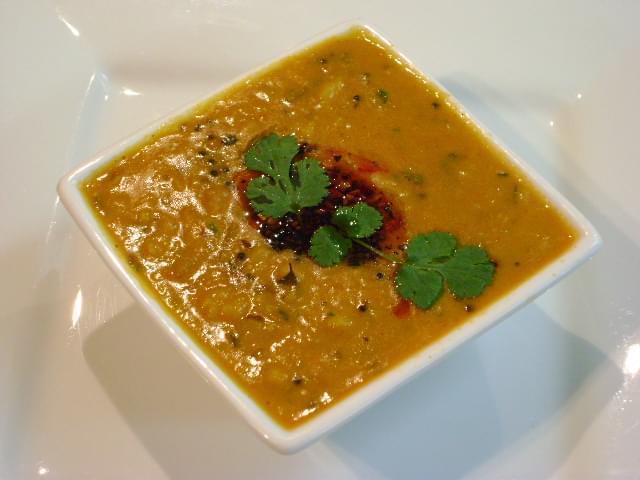 Photo by Southofindia. This is one of the most commonly eaten dishes (already at breakfast). The main ingredient is lentils(daal) which are cooked with coconut milk and transformed, thanks to the addition of curry, into a rich stew that goes perfectly with rice.
It is often served with boiled rice, roti (a kind of flat bread) and naan (flat bread).
Dhal Curry is a very mild and nutritiouscurry that everyone likes. It is an Indian-derived dish and can be considered universal. It has a mild flavour, is not spicy, vegetarian, and is also suitable for children.
It can be the main dish or a side dish, so it is extremely versatile.
Recommended for: always
Average cost: €0.80
Main ingredients: lentils, curry
5 - Kottu (vegetarian, egg, cheese)
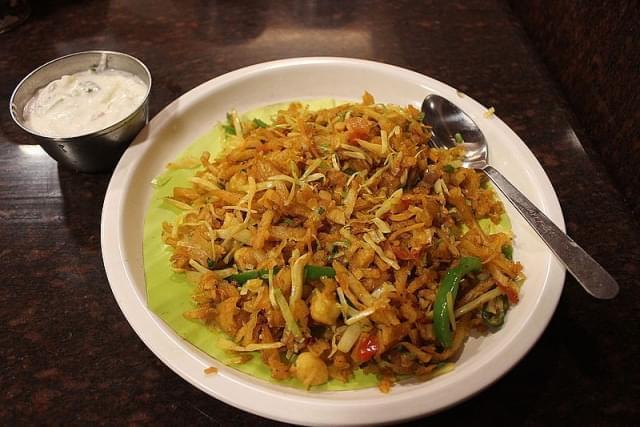 Photo by KARTY JazZ. The most popular street food is Kottu. It consists of shredded pieces of paratha (pieces of unleavened bread) that are first fried and then mixed with vegetables and other ingredients such as bacon, egg, chicken and spices on a hot griddle. There is also a vegetarian version with leeks, onions and cabbage.
Itcan be called the Sri Lankan hamburger, and is often served with a bowl of curry sauce to moisten and add flavour to the fried flatbread.
It is bought in typical roadside fast food places: you can take it away in take-away mode, or you can stop and eat it at the tables set up inside. Seeing it freshly prepared by the cook is an enthralling sight!
Recommended for: snacking
Average cost: €0.80
Main ingredients: paratha, eggs, meat, vegetables, spices
6 - Brinjal
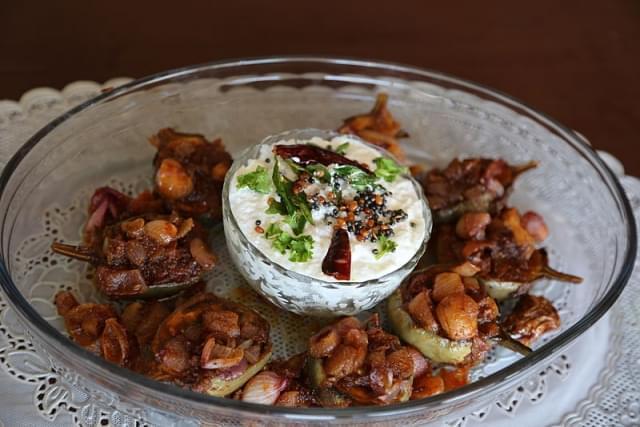 Photo by Kanchana Bose. When you order rice in Sri Lanka, it may come with five or more bowls of different preparations. Among the most popular preparations is certainly Brinjal, a kind of aubergine pickle with a really good sweet-savoury taste. First of all, it should be pointed out that the aubergines on the island are quite different from ours: definitely smaller and lighter, with white streaks.
For this preparation, the aubergines are cut and fried generously and spices and sugar are added until they are completely caramelised.
Although it is one of the country's most famous dishes, it is clear that each area of the island, but also each household, has its own variation.
Recommended for: side dish at lunch and dinner
Average cost: €0.50
Main ingredients: aubergines and spices
7 - Hoppers (Appa)
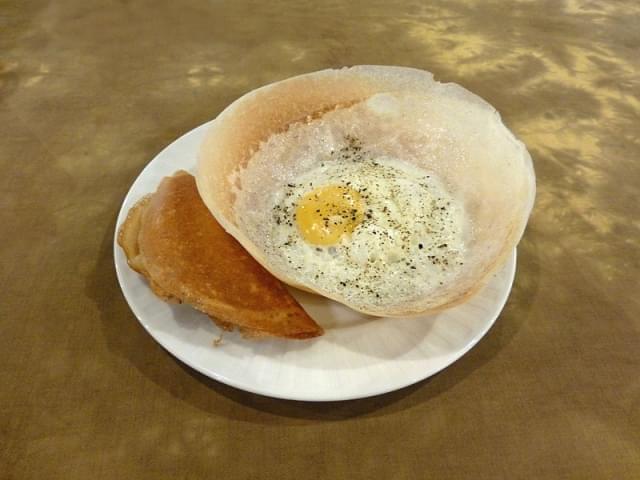 Photo by Ji-Elle. Also known as Appa, they are an iconic Sri Lankan food.
They are a kind of crepes, very thin and crispy, made with a batter of eggs, coconut milk and a dash of toddy (palm wine). They have a concave shape, as if they were a kind of bowl, because they are cooked in a small wok instead of the classic crepe griddle. This way they remain thick and fluffy on the bottom and thin and crispy towards the edges.
They can be ordered plain, but more often they are filled with a fried egg, chickpea-based dips and various vegetables.
They can be found everywhere and are really tasty.
Recommended for: breakfast and snack
Average cost: €1.00
Main ingredients: eggs, coconut milk, vegetables
8 - Pol roti, coconut roti and chili salt
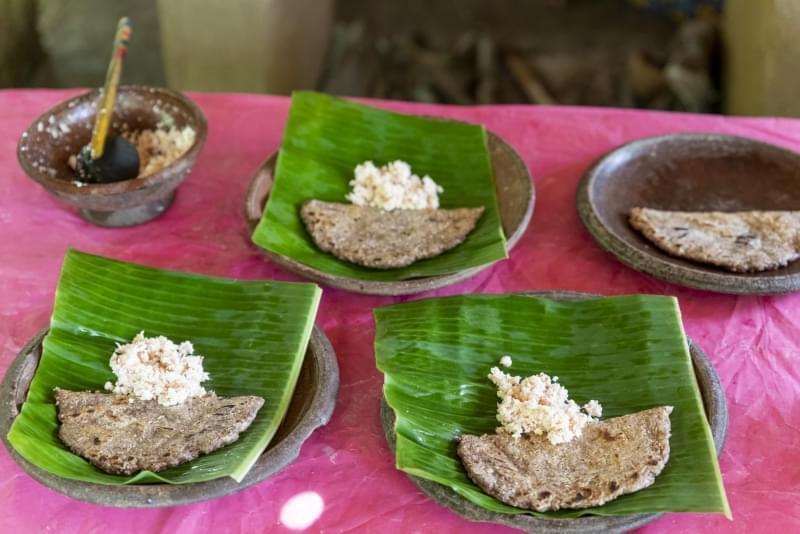 Photo by Federica Ermete. Roti is a kind of soft piadina, a kind of tortilla that resembles Indian roti (but less fatty) and African chapati.
The dough is prepared with freshly grated coconut, flour, water and salt. Dough balls are formed and then flattened and baked on a hot griddle.
It is eaten as a snack dipped in a spicy curry sauce made by mixing grated coconut, chilli powder, tomato, lime juice, red onions and salt.
With a bit of imagination, it can be called a Sri Lankan mini-pizza.
Recommended: snack
Average cost: €0.50
Main ingredients: fresh grated coconut, flour, water
9 - Ulundhu vadai
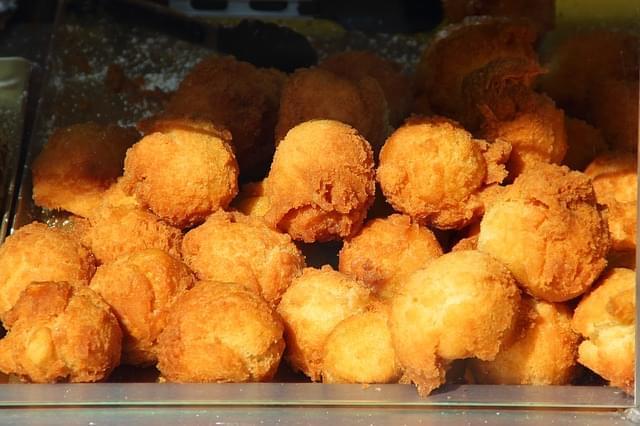 Apart from extremely spicy dishes, the Sinhalese are crazy about fried snacks.
Everywhere you go, you'll find street vendor stalls selling deep-fried, greasy patties and rolls of all shapes and sizes!
These fried snacks are commonly called'eat shorts' and, in addition to being sold in roadside stands, are offered by street vendors on trains or at the beach.
Ulundhu vadai, specifically, are small pancakes, very similar to flat patties, made with dhal (lentils), combined with incredible spices and fried until perfectly crispy on the outside and soft on the inside.
Recommended for: snacking
Average cost: €0.25
Main ingredients: lentils
10 - Grilled fish
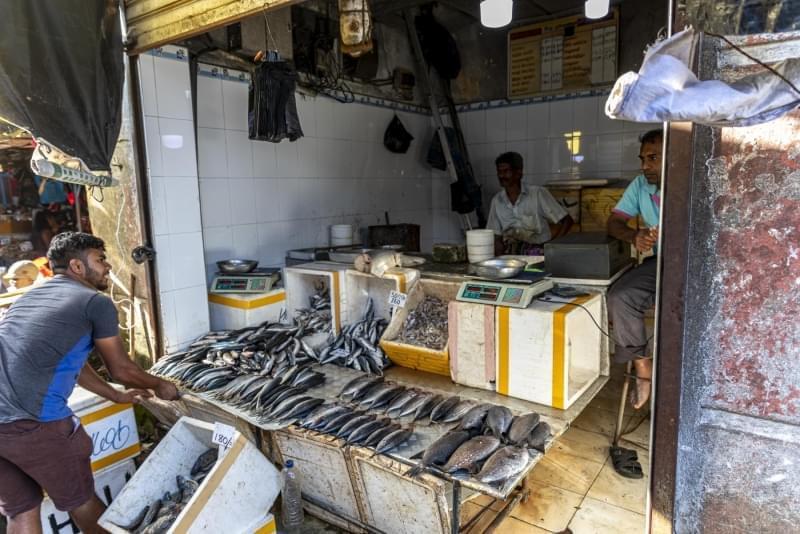 Photo by Federica Ermete. After visiting the cultural triangle and admiring the views of the highlands, once you reach the coast of the island, you cannot fail to have a good meal of fish, which is the mainstay here. Fish products, in fact, make up the bulk of the food in the sea areas.
Common fish are tuna, gilthead bream, sea bass, dentex, mackerel, but also prawns, crabs, lobsters and squid.
Fish is ideal for those who want to be sure of not running into fiery dishes, as the fish is simply cooked on the grill.
In seaside resorts, such as Mirissa and Hikkaduwa and Negombo, at sunset time, the classic ritual is to wait for the return of the fishermen's boats while the restaurateurs start setting up tables on the beach.
Fresh fish of the day is placed on counters sprinkled with ice and, at dinnertime, all one has to do is choose what one wants to eat directly from the counter. This is cooked on the grill and you pay by weight.
Eating fresh fish with your feet in the sand is definitely a very romantic experience and one to be had at least once in a lifetime!
Recommended: lunch, dinner
Average cost: from €25.00 per kg
Main ingredients: fresh fish
Typical Sri Lankan sweets
It may be that the tropical fruit available is delicious, it may be that it is really very hot and you mostly crave cool, thirst-quenching stuff, but there is no particular dessert culture.
Even in restaurants and hotel buffets, one finds more of a lot of fruit to accompany, possibly, industrial ice cream.
Even at breakfast, the sweetest you will find are some very simple dry biscuits and a few soft donut-type cakes, so nothing special or suggestive of something typical.
Here are the relevant pastry specialities.
1 - Buffalo and Kitul yoghurt
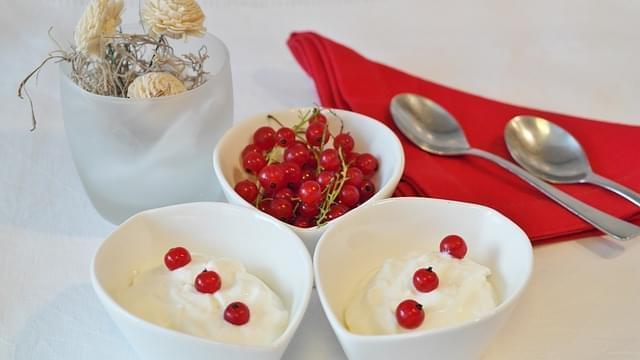 The custom of eating curd mixed with other ingredients originates from India.
In Sri Lanka, buffalo milk curd is always topped with kithul molasses syrup, a syrup made from liquid raw cane sugar. In the absence of this ingredient, this kind of yoghurt can simply be mixed with sugar, honey or pieces of fruit.
The taste is so sour that it is impossible to eat it on its own!
In fact, Sinhalese curd tastes very similar to natural yoghurt, but much more sour.
Creamy and slightly sour, it is ideal for'sweetening' the mouth without being cloying.
Average cost: €1.50
Main ingredients: buffalo yoghurt, kithul
2 - Wattalappam
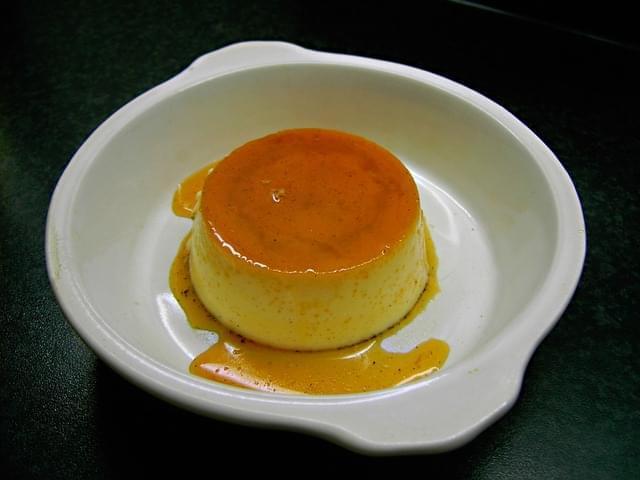 A pudding made with coconut milk, this Malaysian-derivedpudding is vaguely reminiscent of crème caramel, but is much thicker and less viscous.
The basic ingredients are: coconut milk or condensed milk, jaggery, cashews, eggs, various spices, including cardamom, cloves and nutmeg, and sometimes grated vanilla pods
Average cost: €1.50
Main ingredients: coconut milk, eggs, cashews
3 - Kiribath
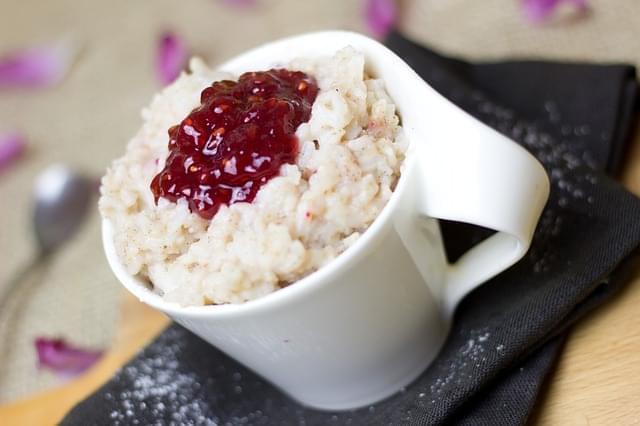 This isa traditional sweet made from rice and coconut milk. It can be considered a form of rice cake or rice pudding.
Asymbol of good omen, it is mainly cooked on special occasions and holidays. Essential for every auspicious moment, it is commonly brought to the table for breakfast on the first day of every month. And it is an unmissable dish during the celebration of the Sinhalese New Year, when it is cooked and served as the first meal after the dawn of the New Year.
It is also the first solid food with which babies are weaned and is also served at weddings.
It is usually served with Lunumiris, a mixture of red onions and spices, but also with bananas.
The recipe for replicating this dessert is quite simple: you boil the rice in boiling water for about 15 minutes, then add coconut milk and cook it again until the liquid is completely absorbed.
Average cost: €1.00
Main ingredients: rice, coconut milk
4 - Pittu
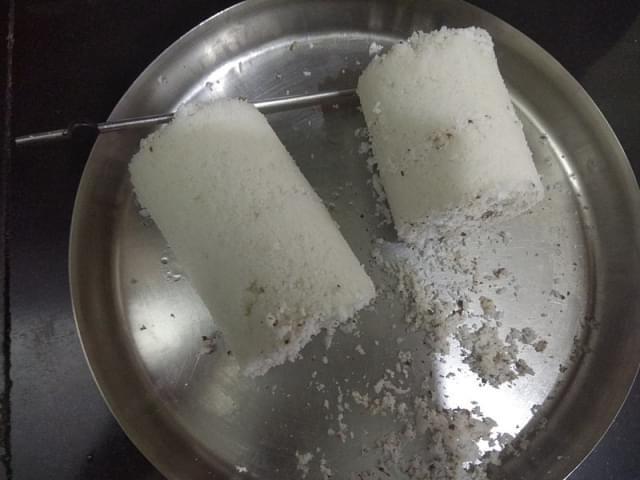 Photo by BHARATHESHA ALASANDEMAJALU. These are coconut-based sweets for a change. A combination of flour (either rice or karukan), fresh grated coconut and a handful of dehydrated coconut.
They are shaped like small white cylinders and are traditionally steamed in bamboo, but are now sometimes steamed in circular metal tubes.
After cooking, these crumbly pittu are served with sweetened coconut milk.
Sometimes pittu are spiced with cumin and served with various side dishes including palm sugar, chickpea curry or bananas.
Average cost: €0.20
Main ingredients: coconut
5 - Fruit
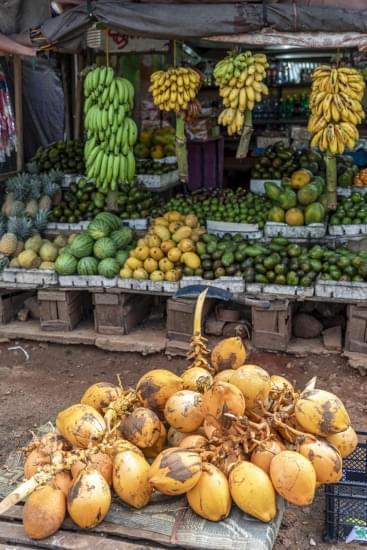 Photo by Federica Ermete. This country has an incredible variety of fruit, marvellous, colouring the market stalls, from mangoes to bananas, avocados to pineapples, and strange local fruits such as durian and limonia, mangosteen and jackfruit.
Impossible not to taste these delicacies and fall in love with them. They are the perfect snack to refresh and quench your thirst during hot afternoons.
You can either eat the fruit fresh or try it in the form of tasty juices and smoothies, and even in the form of delicious fruit salads perhaps with the addition of a scoop of ice cream.
Some fruits are sold on the street as snacks, such as paper cones filled with mango sticks that locals sprinkle with chilli peppers!
Another way of consumption involves frying; one of the most popular snacks are fried jackfruit seeds, which are salted and served in small paper bags to be eaten while strolling.
Average cost: from €0.40
Main ingredients: fruit
Drinks and spirits: what people drink in Sri Lanka
First recommendation: avoid tap water! Always drink only bottled water and also use it to brush your teeth.
Soft drinks are available everywhere, both international and local brands.
Coconut milk is ubiquitous, as, on the other hand, is the famous tea.
Coffee is also widespread, both in soluble form and in the form of Nescafé.
Finally, there is a deep-rooted culture for spirits. The Sinhalese are crazy about beer, introduced by foreign prisoners under the reign of Kandy.
1 - Ceylon Tea
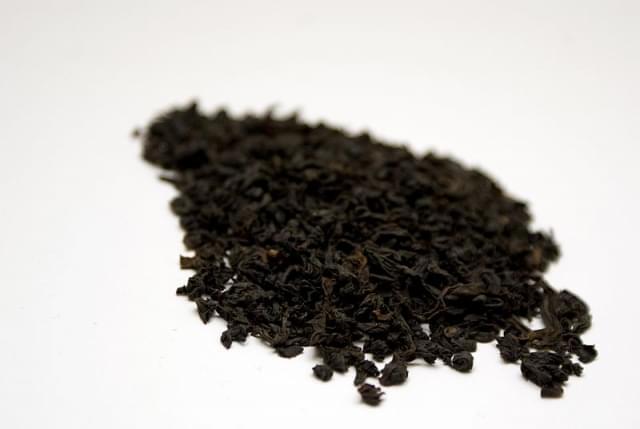 Photo by Patrick Kolencherry. The country is one of the world's leading producers of tea. A trip here would not be the same without savouring several cups a day.
Thebest place to taste various types of tea are the producing factories where there is a canonical tour(book your tour online).
First you are shown the process, from harvesting to drying, fermenting and crumbling the leaves, and then you are shown into the bar where various types of tea are served: more or less light and in different flavourings.
Finally, a walk through the plantations observing the pickers at work and a stop in the shop are a must.
Average cost: from €0.80 the small packet
Main ingredients: tea
2 - Coconut water
No ingredient is more vital than coconut. Every household consumes at least 2 nuts a day. Practically nothing is thrown away from the coconut, a bit like pork.
The water is drunk, the pulp is eaten and grated to make coconut milk in which fish and meat are marinated, and finally, with the rind, strong barks are made to make ropes and various utensils.
In Sri Lanka, there are many varieties of this special fruit, the most famous of which is the orange-coloured royal coconut.
Popular and appreciated on hot afternoons, coconut water is drunk directly from the fruit.
It is a widely available product as, everywhere along the streets, there are vendor stalls ready to smash the coconut with a machete.
Slightly acidic, not everyone may like it, but it is certainly very thirst-quenching.
It is also said, thanks to its mixture of glucose and potassium, to be a good remedy against hangovers and dysentery symptoms. A kind of scoop is made from the peel, with which the inner wall can then be scraped and the delicate, slightly slimy fruit can be enjoyed.
Average cost: €0.20
Main ingredients: coconut
3 - Coffee
Coffee has always played second fiddle to tea in Sri Lanka, especially since the island's coffee plantations were destroyed in the 1870s.
Coffee is, however, a drink that can always be found. It is often found in soluble form, even if locally produced; this explains the light, bitter taste.
It is not uncommon, however, to find places that make espresso and cappuccino, which are of questionable taste.
To be on the safe side, the best choice is to opt for Nescafé, dispensed directly from special machines.
Average cost: €0.50
Main ingredients: coffee
Tips and trivia: where to eat and what to avoid
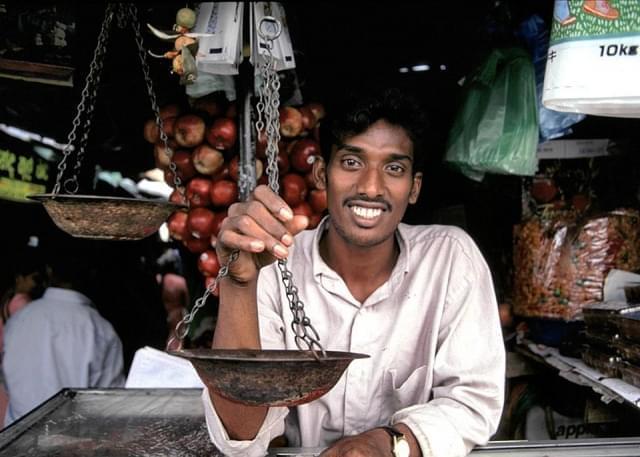 Where toeat depends a lot on where you are. Some large towns, such as Kandy and Sigiryia, are devoid of tourist restaurants, while in the capital or in the seaside resorts there is a teeming of eateries.
The most convenient, if not obligatory, option is to dine at the hotel where you are staying.
The best choice are the hotelbuffets, which are also very cheap (€5.00/6.00 excluding drinks).
Along the coast and in seaside resorts it is better to eat fish: very fresh and of excellent quality (about €25.00 per kg).
Stalls and kiosks with fried snacks along the way are beautiful to see and unmissable to take pictures of, but stop at that. It is not advisable to consume street food products, because there is no guarantee of hygienic conditions or the quality and freshness of the oil used for frying.
The recommendation remains to drink only bottled water (and use it to brush your teeth too!), eat only cooked vegetables and fruit that can be peeled.